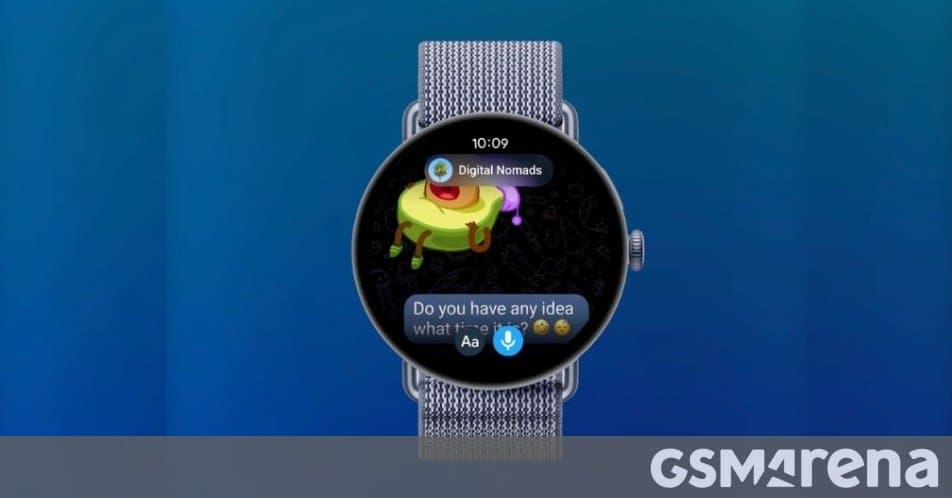
Telegram is back on Wear OS, giving Android smartwatch owners a fuller messaging app instead of a notification-only shortcut.
Announcement
Telegram has returned to Google’s smartwatch platform with a dedicated app for Wear OS, bringing the service back to Android watches after its earlier Wear OS app disappeared from the Play Store in 2021. The new app follows Telegram’s recent native Apple Watch release, which makes this a broader wearable push rather than a one-off platform experiment.
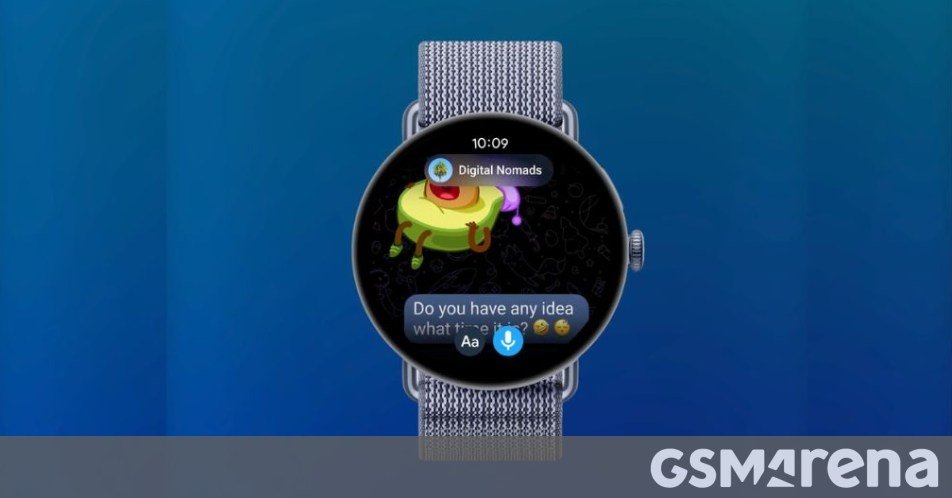
For users, the practical change is simple: Telegram on the wrist is no longer just about receiving a buzz, glancing at a notification, and deciding whether to pull out a phone. The new Wear OS app supports full conversations directly on the watch. That means users can browse chats, scroll through message history, view shared media, listen to voice notes, record new ones, send stickers, and manage conversations without opening Telegram on a phone.
The app should be available through Telegram’s existing Android distribution path, including the Telegram listing on Google Play, depending on device compatibility and rollout timing. Telegram’s main product hub remains telegram.org, while Wear OS app behavior depends on Google’s watch platform, device maker support, and the version of Wear OS running on the watch.
Key Features
The headline feature is access to full chats. That sounds obvious for a messaging app, but it matters on a smartwatch because many wearable messaging experiences are still notification-first. A notification lets you react to the latest incoming message. A full chat view lets you catch context. If someone sends three messages, deletes one, follows up with a photo, then asks for a quick decision, the difference between notification triage and actual conversation access becomes obvious.
Telegram says the Wear OS app can display shared media, including photos, videos, and location previews. On a small circular or squircle display, this will not replace a phone, but it does reduce friction. A location preview can tell you whether a friend sent a meeting point or just a general area. A photo preview can help you decide if something needs an immediate response. A short video may still be awkward on a watch, but having media visibility keeps the watch app from feeling like a stripped-down text terminal.
Voice messages are the feature that may fit the watch best. Smartwatches already have microphones, speakers, haptics, and quick-access input patterns. Typing on a watch keyboard is possible, but it is rarely pleasant for anything beyond a few words. Voice notes match the hardware. Being able to listen to a Telegram voice message and record a reply from the wrist makes sense while walking, commuting, cooking, or carrying bags.
Telegram is also bringing stickers to chat threads on Wear OS. That is less critical than voice support, but it preserves part of Telegram’s personality. Messaging apps are not only utility pipes. People use reactions, stickers, GIF-like expressions, and visual shorthand because they make lightweight replies feel less cold. On a watch, where input is constrained, a sticker can be faster than pecking out a sentence.
The app also includes chat management tools, including pinning, muting, and deleting conversations from the watch. That gives the Wear OS client more responsibility than a basic companion app. Pinning a conversation from the wrist is useful if a thread suddenly becomes high priority. Muting is even more important, because smartwatch notifications can become physically annoying in a way phone notifications are not. A busy group chat on a phone is distracting. The same group chat buzzing on your wrist every few seconds can be unbearable.
There are still natural limits. A smartwatch is not the ideal place to search long message histories, manage large groups, review dense media galleries, or compose careful replies. Battery life also matters. Apps that sync conversations, load media, and record audio can demand more from compact watch hardware than simple notification mirroring. Devices using newer wearable chips such as Qualcomm’s Snapdragon W5 family, Samsung’s recent Exynos wearable chips, or Google’s Pixel Watch hardware should generally be better positioned than older Wear OS models with slower processors and smaller batteries, but Telegram has not provided a detailed public spec table in the supplied announcement.
OS version support is the other practical question. The report confirms Wear OS support, but not a precise minimum Wear OS version. That distinction matters because the Wear OS device base is fragmented across older Wear OS 3 watches, Wear OS 4 devices, Wear OS 5 models, and newer software arriving through Google and manufacturer updates. Google documents the developer side of the platform through its Wear OS developer resources, but consumers will mostly experience compatibility through the Play Store. If the install button appears for a watch, that is the clearest answer.
Ecosystem Context
Telegram’s return to Wear OS says something about the state of smartwatches in 2026. The best watch apps are not miniature phone apps copied pixel for pixel. They are focused versions of high-frequency actions: checking context, replying quickly, triaging notifications, controlling media, paying, navigating, tracking health, and capturing short inputs. Messaging sits near the top of that list because it is constant, personal, and time-sensitive.
The timing also matters because Telegram has now addressed both major wearable ecosystems. The Apple Watch app serves users inside Apple’s tightly integrated watchOS and iPhone pairing model. The Wear OS app serves the Android side, including watches from Google, Samsung, OnePlus, Xiaomi, Mobvoi, and other hardware partners depending on market and software support. For a cross-platform messenger, appearing on only one wrist platform creates an uneven experience. Supporting both reduces that gap.
This is where ecosystem lock-in becomes more interesting. Apple Watch remains deeply tied to the iPhone. Wear OS is tied to Android phones and Google’s services, with extra layers added by device makers. Messaging apps sit across those boundaries, but their best wearable integrations often depend on platform-specific APIs, notification systems, background execution rules, app stores, and companion-device policies.
Telegram benefits when it feels present everywhere: phone, tablet, desktop, web, and now modern watches again. That presence weakens platform lock-in at the messaging layer because users can keep the same chats even when switching phones or computers. At the same time, the watch experience still reinforces device ecosystem choices. An iPhone user gets the Apple Watch route. An Android user gets Wear OS. A Huawei HarmonyOS watch user, for example, may still be left waiting unless Telegram chooses to support that platform separately.
For Android users, the biggest win is that Telegram now behaves more like a first-class watch citizen. Google Messages, WhatsApp, and other communication apps have raised expectations for wrist-based replies and conversation access. Telegram returning to Wear OS keeps it competitive for users who rely on the app as a primary communication tool rather than a secondary chat option.
Security and privacy expectations also follow Telegram onto the wrist. Smartwatches are glanceable devices, which is convenient but sensitive. A full chat app on a watch means users should review notification previews, lock settings, and wrist detection behavior. A watch can be easier for nearby people to glance at than a phone held close to the body. The convenience of full conversations should be paired with sensible privacy settings, especially for shared workspaces, transit, classrooms, and family environments.
The broader takeaway is that smartwatch apps are becoming less optional for major communication platforms. A few years ago, many companies trimmed wearable apps because usage seemed limited and maintenance costs were high. Now the category is more mature. Watches have better screens, faster chips, more capable app stores, and users who expect quick actions from the wrist. Telegram’s Wear OS return fits that shift: not a replacement for the phone app, but a serious companion for moments when pulling out a phone is unnecessary.
For Telegram users with a compatible Wear OS watch, this is the kind of update that changes small routines. You can check a full thread during a walk, send a voice reply while your phone stays in a pocket, mute a noisy chat before it drains your attention, or confirm a location preview without opening another device. That is exactly where smartwatch software is most useful: not doing everything, just removing the tiny delays from things you do all day.
Comments
Please log in or register to join the discussion