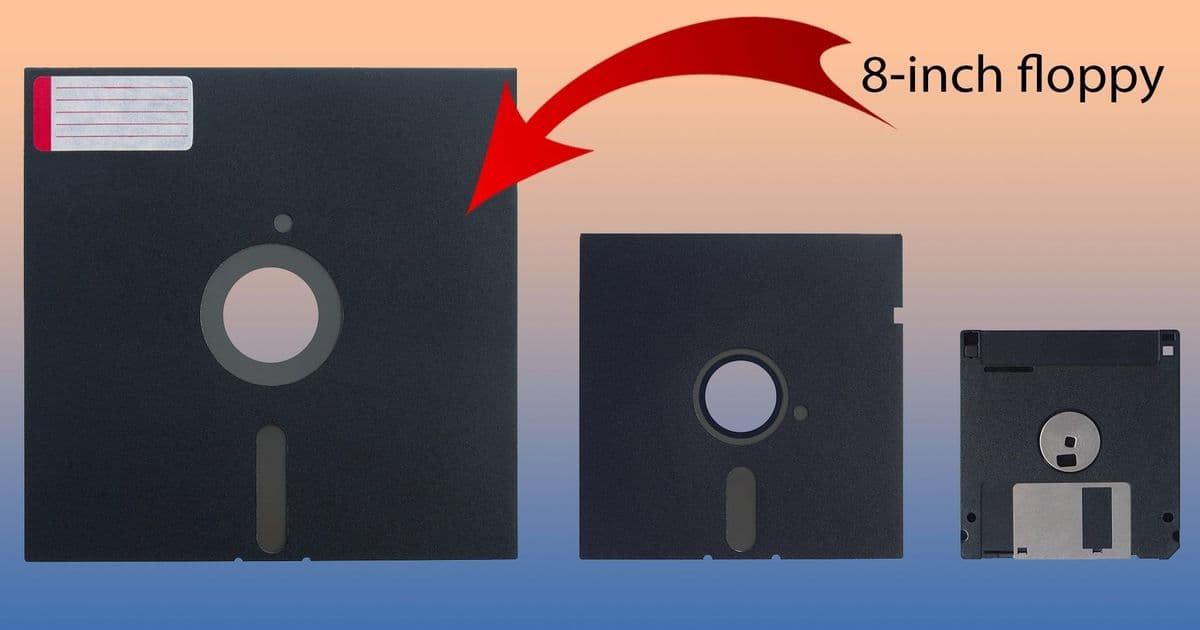
Fifty-two years ago today, IBM engineers received patent 3668658A for the magnetic record disk cover, establishing the foundation for removable storage media that would evolve through multiple form factors and capacity increases, ultimately shaping personal computing history.
On June 26, 1972, IBM engineers Alan Shugart and David Noble received U.S. patent number 3668658A for their "magnetic record disk cover" invention, marking a pivotal moment in data storage history. This patent described a rotary magnetic medium housed in a protective cover that cleaned and protected the surface, establishing the basic principles that would guide decades of storage technology development.
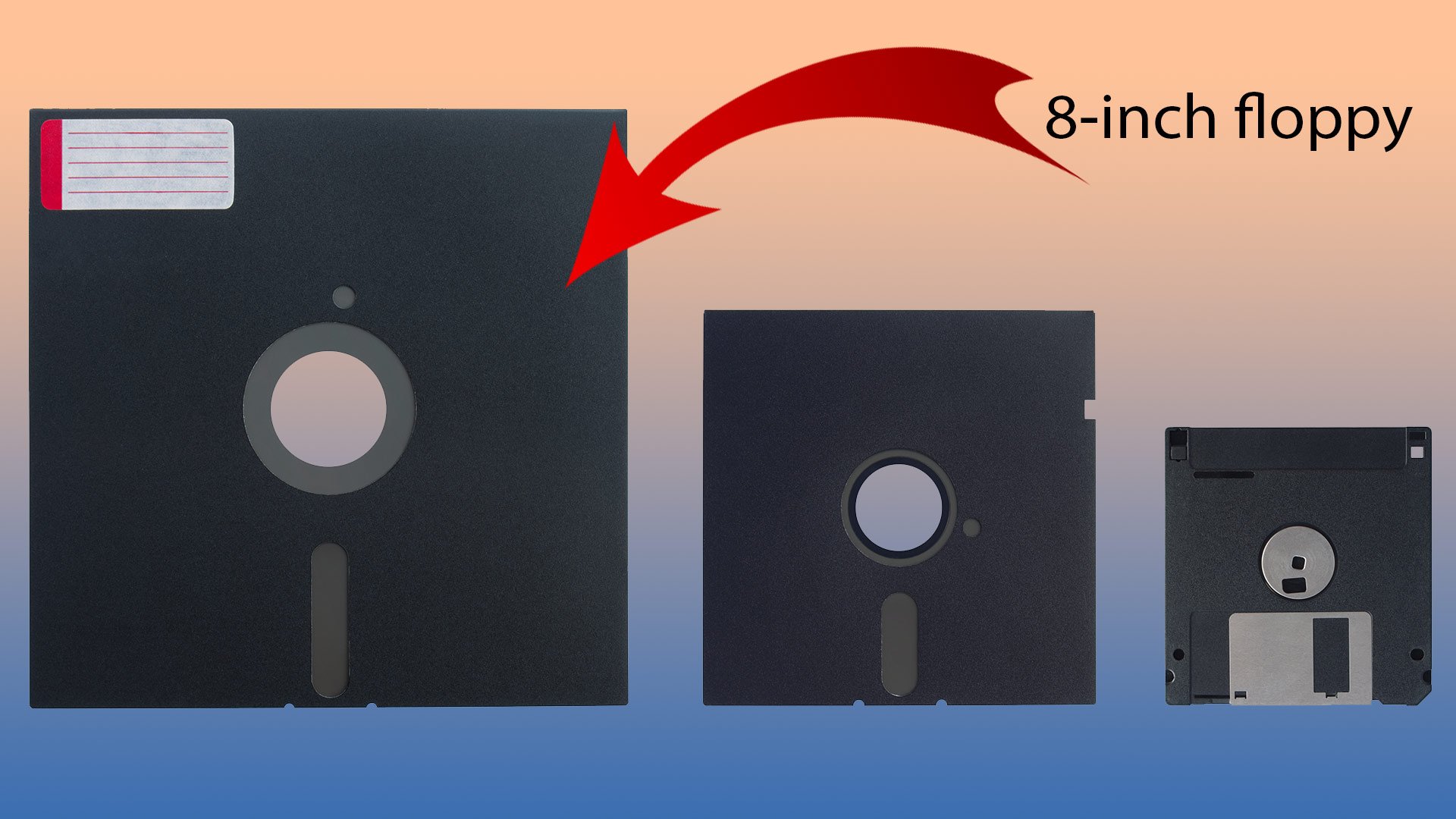
The first floppy disks represented a significant technological achievement for their time. These 8-inch diameter disks, constructed from flexible Mylar material coated with magnetic iron oxide, offered 80 kilobytes of storage capacity. To put this in perspective, this capacity equaled approximately 3,000 punched cards, representing a substantial leap in data density for the era. The disks were inserted through a slot into a disk drive mechanism and spun on a spindle at approximately 300 revolutions per minute, with read/write heads making contact with the recording surface.
The semiconductor components enabling this technology were relatively primitive by today's standards. The floppy disk controllers relied on early integrated circuits with transistor counts measured in the hundreds, compared to billions in modern processors. The read/write heads utilized ferrite core technology, with coil windings that generated magnetic fields to alter the magnetic orientation of the iron oxide particles on the disk surface. The drive mechanisms employed stepper motors with precision tolerances of approximately ±0.001 inches to position the read/write heads accurately.
IBM's Project Minnow, which began in 1967, established several key design parameters that influenced the entire storage industry. The project targeted a device cost under $200 and media cost under $5, representing aggressive cost goals for the time. These constraints directly influenced the semiconductor components selected for the drive electronics and the materials science approach to developing the magnetic coating.
The evolution of floppy disk technology demonstrates several important technological progression patterns. Between 1972 and 1986, storage capacity increased by a factor of 18 (from 80KB to 1.44MB), while physical size decreased by 56% (from 8 inches to 3.5 inches). This improvement trajectory followed Moore's Law principles, with capacity doubling approximately every 2.8 years during this period.
Several key technological innovations drove this progression:
- 1977: Apple II introduced 5.25-inch drives with Steve Wozniak's Group Coded Recording scheme, increasing capacity from 90KB to 140KB
- 1978: Tandon's double-sided drives (DSDD) doubled capacity to 360KB
- 1984: IBM's high-density 5.25-inch format achieved 1.2MB
- 1986: IBM established the 1.44MB standard with 3.5-inch rigid disks
The 3.5-inch format represented a significant materials science advancement. While maintaining the same basic magnetic recording principles as its larger predecessors, these disks used a rigid plastic housing with a sliding metal shutter, improving durability and portability. The increased storage density was achieved through finer magnetic particle coatings and improved head positioning technologies.
From a semiconductor perspective, floppy disk controllers evolved through several generations of integrated circuit technology. Early controllers used discrete logic and small-scale integration (SSI) with fewer than 100 transistors per chip. By the 1980s, controllers utilized large-scale integration (LSI) with thousands of transistors, enabling more sophisticated error correction and data encoding schemes.
The market impact of floppy disk technology was substantial. At their peak, more than 5 billion floppy disks were sold annually, creating a significant market for both media manufacturers and semiconductor companies producing controller chips. The technology enabled the rise of personal computing by providing a practical means of software distribution and data exchange between computers.
The decline of floppy disks began in the late 1990s, with several factors contributing to their obsolescence:
- Increasing storage capacities of optical media (CD-ROM, DVD)
- The rise of USB flash drives with superior capacity and durability
- Network-based distribution methods
- Semiconductor advances enabling smaller, more cost-effective storage solutions
Interestingly, floppy disks continue to serve in specialized applications decades after their mainstream obsolescence. The San Francisco Muni Metro system, New Jersey prisons, and the German Navy have all been reported to use floppy disks for critical systems, highlighting the longevity of this technology in certain niches. These applications typically involve legacy systems where the cost of replacement exceeds the continued use of existing technology.
The floppy disk patent of 1972 represents an important milestone in the history of data storage. While primitive by modern standards, the technology established fundamental principles of removable storage that continue to influence storage design today. The semiconductor components that enabled these early storage devices laid groundwork for the multi-trillion dollar storage industry that now underpins global digital infrastructure.
For more historical information about early storage technologies, you might find IBM's storage history archives informative. The Computer History Museum also maintains extensive collections related to the evolution of storage media.
Comments
Please log in or register to join the discussion