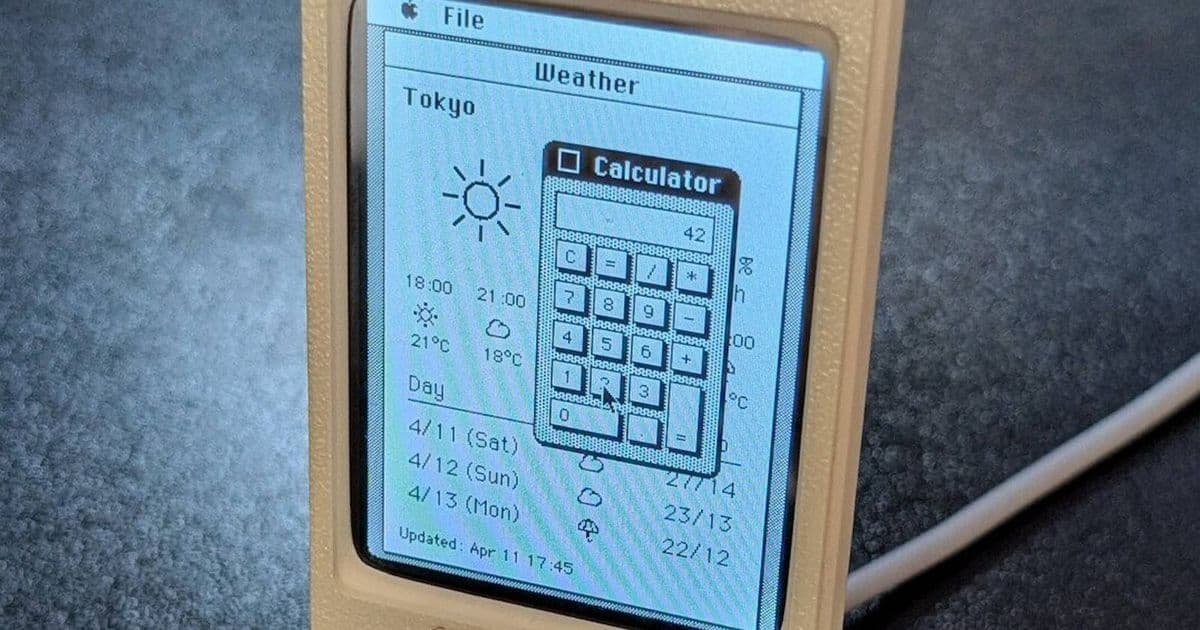
The Cydintosh combines retro Macintosh emulation with modern IoT connectivity, running a 240×320 Macintosh Plus emulator on an ESP32 CYD that can pull live weather data from Home Assistant via MQTT.
The Cydintosh is a fascinating blend of retro computing nostalgia and modern IoT capabilities, combining a Macintosh Plus emulator with real-time weather data pulled from Home Assistant. This innovative project demonstrates how vintage computing aesthetics can be enhanced with contemporary connectivity features.
What Makes the Cydintosh Special
The device runs on an ESP32 Cheap Yellow Display (CYD), a popular development board known for its affordability and versatility. What sets this project apart is its 240×320 pixel display that faithfully emulates the classic Macintosh Plus interface, complete with a touchscreen for modern interaction.
Unlike traditional retro computing projects that focus purely on emulation, the Cydintosh adds practical 21st-century functionality. The device can connect to Wi-Fi networks, eliminating the need for Ethernet connections that would have been standard in the 1980s. This wireless capability opens up possibilities for IoT integration that weren't conceivable when the original Macintosh Plus was released.
Home Assistant Integration
The most impressive feature is the weather application that pulls data directly from Home Assistant. The integration works through a sophisticated data flow:
- Home Assistant automation publishes weather data to an MQTT broker every hour
- The ESP32 subscribes to these MQTT topics and stores the received data
- The Weather App on the Cydintosh polls the ESP32 via Inter-Process Communication (IPC) every 30 seconds
- The weather information is then rendered on the Macintosh Plus interface
This setup creates a seamless bridge between modern smart home technology and retro computing aesthetics. Users can enjoy the classic Macintosh Plus look while accessing up-to-date weather information, making the device both a conversation piece and a functional tool.
Building Your Own Cydintosh
For those interested in creating their own version, the project is well-documented and accessible. The complete source code, 3D-printed shell schematics, and detailed instructions are available on GitHub, making it possible for hobbyists and makers to replicate the build.
The ESP32 CYD serves as the foundation, providing the processing power and display capabilities needed for the emulation. The 3D-printed shell gives the device its distinctive Macintosh Mini appearance, while the software stack handles both the emulation and the modern connectivity features.
Technical Implementation
The project showcases several interesting technical approaches. Using MQTT for data transmission between Home Assistant and the ESP32 is particularly elegant, as it's lightweight and well-suited for IoT applications. The IPC mechanism for polling weather data every 30 seconds ensures that the display remains responsive while not overwhelming the system with constant updates.
The choice of a 240×320 display is significant because it's large enough to render the Macintosh Plus interface legibly while remaining within the capabilities of the ESP32 hardware. The touchscreen adds an interactive element that wasn't present in the original Macintosh Plus, creating a more engaging user experience.
Why This Project Matters
Projects like the Cydintosh represent an interesting trend in the maker community: combining vintage computing aesthetics with modern IoT capabilities. They demonstrate that retro computing doesn't have to be purely about preservation or nostalgia—it can be a foundation for innovative new applications.
The integration with Home Assistant also highlights the growing ecosystem of smart home platforms and how they can be leveraged in creative ways. By pulling weather data from a centralized home automation system, the Cydintosh becomes part of a larger connected environment rather than existing in isolation.
Getting Started
If you're interested in building your own Cydintosh, you'll need an ESP32 Cheap Yellow Display, access to a 3D printer for the case, and a Home Assistant installation for the weather data. The project requires some familiarity with embedded systems and MQTT, but the comprehensive documentation makes it accessible to motivated hobbyists.
The ESP32 CYD is readily available from various electronics retailers, and the 3D-printed case can be customized to your preferences. The software components are open-source, allowing for modifications and extensions beyond the basic weather functionality.
The Cydintosh proves that with modern microcontrollers and open-source software, it's possible to create devices that honor computing history while embracing contemporary technology. It's a perfect example of how the maker community continues to find innovative ways to blend the old with the new.
Comments
Please log in or register to join the discussion