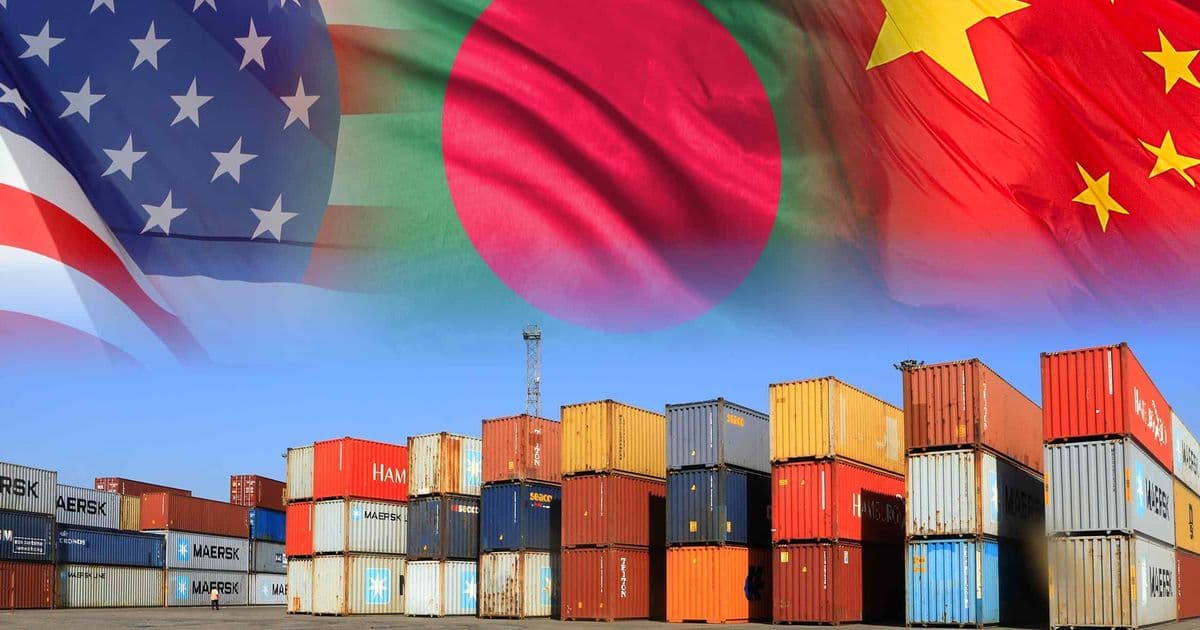
Newly imposed US trade conditions on Bangladesh reveal Washington's strategic push against Beijing's influence, forcing Dhaka into a precarious balancing act between the superpowers.
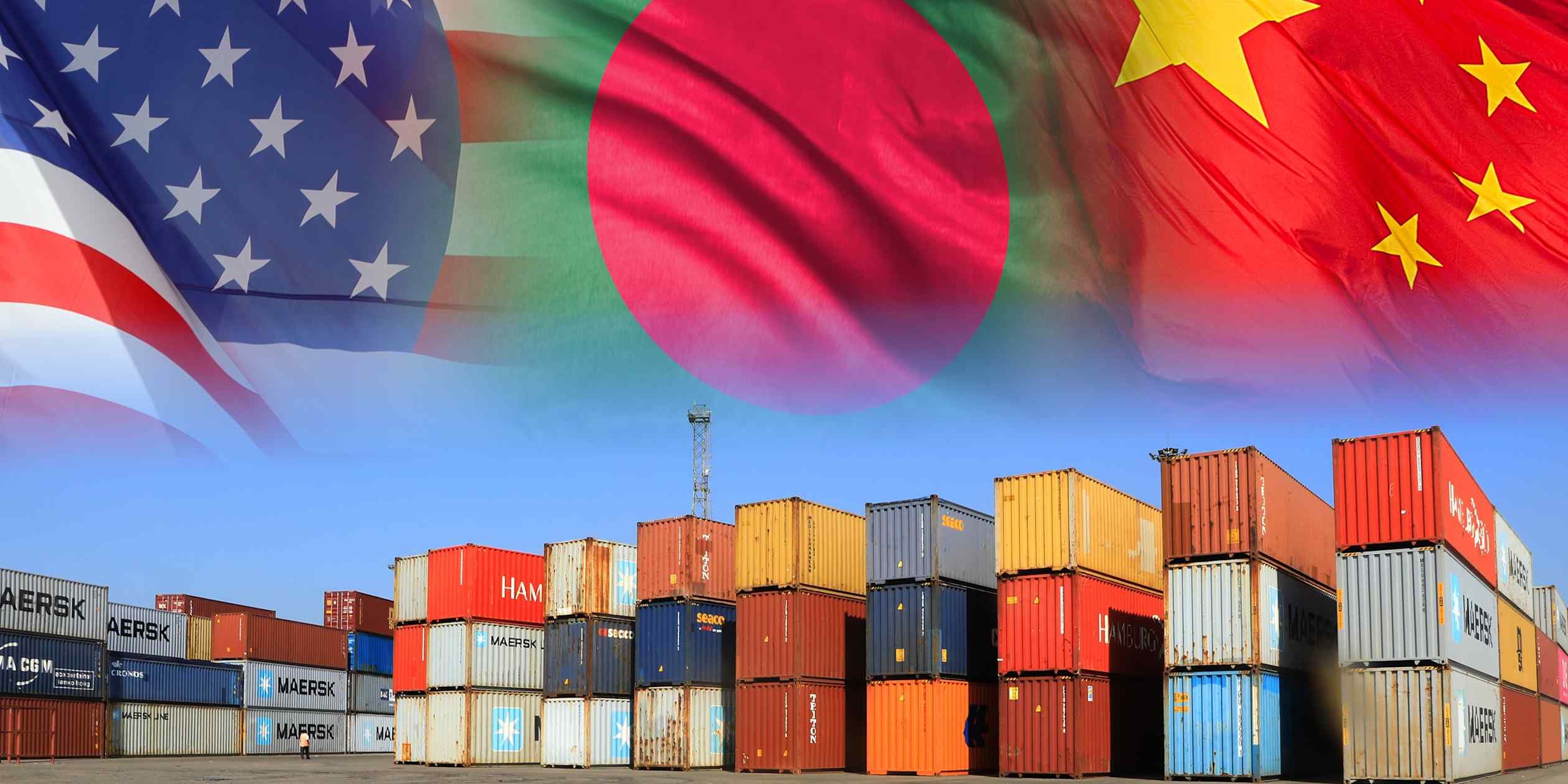
The United States has imposed stringent trade conditions on Bangladesh in a recently finalized agreement, signaling an intensification of geopolitical competition with China in South Asia. The deal comes as new Bangladeshi Prime Minister Tarique Rahman navigates dual dependencies: US market access for the nation's $55 billion ready-made garment industry versus China's infrastructure investments exceeding $26 billion under its Belt and Road Initiative.
Washington's terms include enhanced labor standards monitoring and supply chain transparency requirements, directly impacting Bangladesh's export sector that accounts for 84% of its total exports. The US remains Bangladesh's largest single-country export destination, absorbing 18% of shipments worth $8.5 billion annually. Concurrently, China has financed critical infrastructure including the $3.6 billion Padma Bridge rail link and $1.32 billion Payra power plant, while positioning itself as Bangladesh's primary arms supplier.
This economic tug-of-war reflects broader strategic patterns. US trade pressure aims to counter China's regional influence through mechanisms like the Indo-Pacific Economic Framework, which prioritizes supply chain resilience against Chinese dominance. Meanwhile, Beijing's infrastructure diplomacy creates debt leverage—Bangladesh owes China approximately $4 billion, representing 6% of its external debt. The dual dependency creates vulnerability: US sanctions could jeopardize garment sector revenue, while resisting Chinese terms risks infrastructure funding critical for Bangladesh's GDP growth target of 7.5%.
For Prime Minister Rahman, the calculus involves navigating Washington's demands for democratic reforms alongside Beijing's preference for transactional relationships. The balancing act carries material consequences: failure to satisfy US conditions could trigger Generalized System of Preferences (GSP) tariff suspensions affecting 5,000+ products, while distancing from China might stall the planned $12 billion Dhaka-Chattogram high-speed rail project. Industry analysts note Bangladesh's export processing zones—critical for electronics manufacturing—face bifurcated futures: US-aligned zones emphasizing ESG compliance versus China-backed industrial parks prioritizing rapid scaling.
Geopolitically, the friction mirrors US-China competition across developing economies, where trade access and infrastructure financing serve as proxy battles. Bangladesh's strategic location bordering Northeast India and Myanmar amplifies its importance, with both superpowers seeking naval access to the Bay of Bengal. Economic data reveals the stakes: Bangladesh-China trade reached $25 billion in 2025 (21% YoY growth), while US-Bangladesh trade grew just 3% to $12 billion, creating asymmetric leverage points.
The outcome will test Rahman's ability to maintain non-alignment while extracting maximum value from both powers—a challenge compounded by domestic pressures. With garment factory owners demanding US market stability and infrastructure developers reliant on Chinese financing, Dhaka's policy decisions will reverberate through supply chains spanning textiles, electronics, and energy. As superpower rivalry accelerates, Bangladesh's economic trajectory increasingly hinges on navigating this great-power crossfire without becoming collateral damage.
Comments
Please log in or register to join the discussion