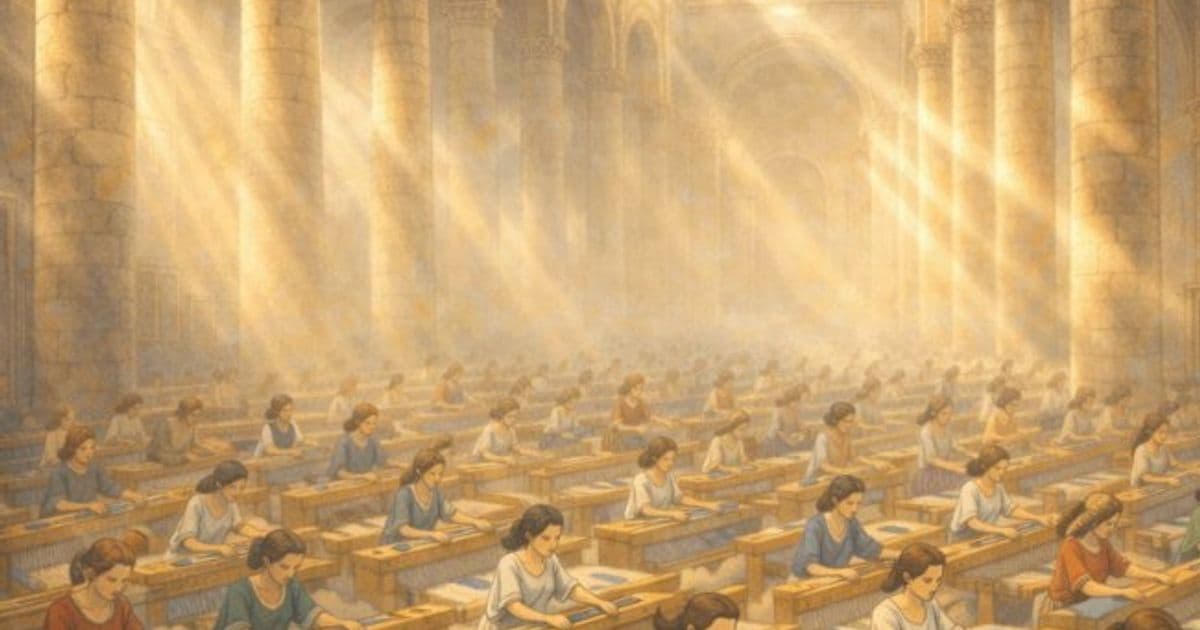
In the second volume of this historical fiction series, Marcus and Ulysses develop industrial machinery to save Pompeii's wool industry from collapse, but their innovations create new economic challenges.
In the second volume of this historical fiction series, Marcus and his master, Gaius, face disaster after Pompeii's destruction. With most of their wool workers dead or injured and the wool rotting in warehouses, the entire Campania region is sliding toward ruin and starvation.
Desperate for a solution, Marcus turns to Ulysses. They use new designs to build the first machines, allowing the survivors to work much faster than ever before. They save the community, but the massive scale of the new industry creates a surplus that the old world wasn't built to handle.
The story explores the unintended consequences of technological innovation in a pre-industrial society. While the machines solve the immediate crisis of rotting wool and potential famine, they create a new problem: an economic system unprepared for industrial-scale production.
This narrative mirrors real historical patterns where technological advancement often outpaces social and economic adaptation. The characters must navigate not just the technical challenges of building new machinery, but the complex social and economic disruptions that follow.
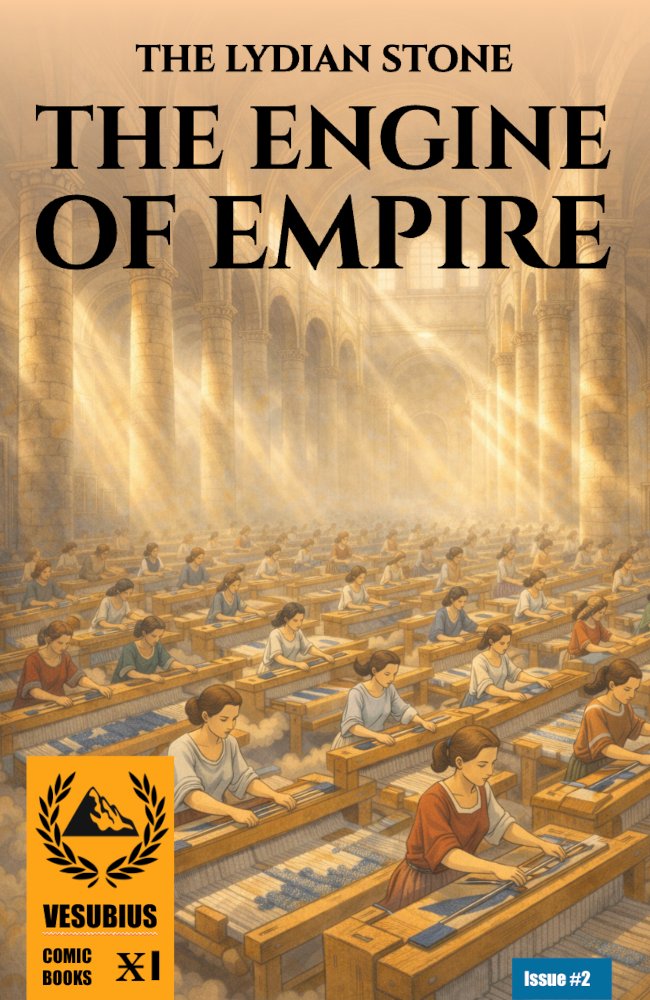
The volume continues the series' exploration of how innovation can be both a savior and a disruptor, forcing societies to evolve or collapse under the weight of their own progress.
Comments
Please log in or register to join the discussion