Backend development success in 2026 hinges on system design thinking rather than framework mastery, as understanding how to architect scalable solutions before writing code becomes the critical differentiator between junior developers and senior engineers.
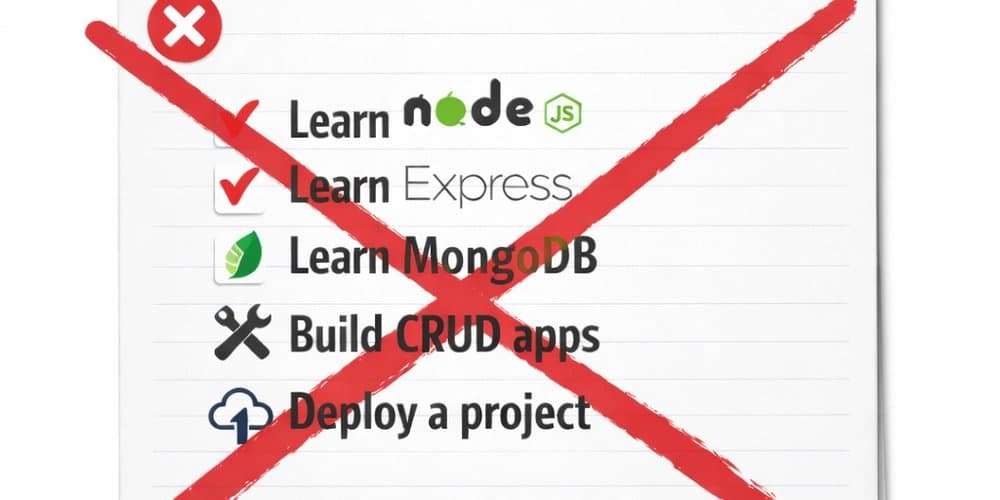
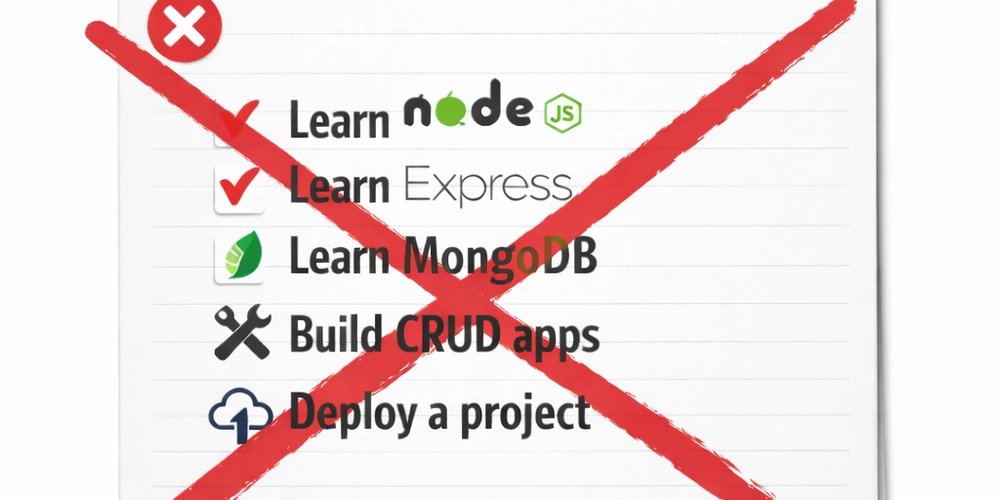
Most people will hand you a roadmap. It usually looks like this: ✨ Learn Node.js. ✨ Learn Express. ✨ Learn PHP. ✨ Learn a framework. ✨ Build CRUD apps. ✨ Deploy something. And they'll call that "backend engineering". But it's not 🙂
The most important skill in backend development: ❌ isn't APIs. ❌ isn't databases. ❌ isn't even design patterns. ✅ It's System Design.
Programming is not: "I want to build something like Uber… let's start coding." That's how beginners think. Real engineering starts before the first line of code. You:
⭐ Understand the problem. ⭐ Define the constraints. ⭐ Think about scale. ⭐ Break the system into components. ⭐ Decide how things communicate. ⭐ Plan failure cases. ⭐ Then… you write code.
And no — it's not "advanced stuff". It's actually more important for beginners. Because it builds something most tutorials never teach you: System thinking. The ability to see the whole picture in your head before it exists.
❌ Tutorial projects won't give you that. ❌ Learning 5 frameworks won't give you that. ❌ Copy-pasting architecture from YouTube won't give you that.
How to actually learn System Design??
Study real architectures. This repo is a solid starting point: https://github.com/donnemartin/system-design-primer
Before starting any project, pause. Even if it's small. Draw:
What components do I need? Where does data live? How do parts communicate? What could break?
It doesn't need to be complex. Just think before you build.
Watch practical breakdowns. This channel explains things clearly: https://www.youtube.com/@TechPrepYT
Practice on simple ideas. Don't start with "Let's build Uber." Start with:
URL shortener Chat system Task queue
And design them first — on paper.
If you're learning backend in 2026, don't just chase technologies. Build the mindset that lets you design before you code. That's the real skill. And it compounds.
Why System Design Beats Framework Knowledge
In 2026's backend landscape, the difference between a junior developer and a senior engineer isn't how many frameworks they know. It's how they approach problems.
Consider this: Two developers are tasked with building a real-time chat application. Developer A immediately reaches for Socket.io, Express, and MongoDB. Developer B starts by asking: "How many users? What's the expected message volume? Do we need persistence? How do we handle failures?"
Developer A might build something that works for 10 users but crashes at 100. Developer B designs a system that scales from 10 to 10,000 users without breaking.
The Hidden Cost of "Just Build It" Mentality
The tutorial-driven approach creates a dangerous illusion of competence. You can follow along with 50 tutorials, build 20 CRUD apps, and still be completely unprepared for real-world backend challenges.
Why? Because tutorials hide the complexity. They give you a working solution without teaching you why it works or what happens when it breaks.
Real backend development involves questions like:
- How do I handle 10,000 concurrent connections?
- What happens when my database goes down?
- How do I prevent race conditions?
- When should I use caching vs. denormalization?
- How do I design for observability?
These aren't framework questions. They're system design questions.
The Compound Effect of System Thinking
Learning system design early creates a compound effect that accelerates your entire career. Here's why:
- Better Problem Decomposition: You learn to break complex problems into manageable components
- Failure Anticipation: You naturally consider edge cases and failure scenarios
- Scalability Mindset: You design with growth in mind from day one
- Communication Skills: You can explain your architecture to others clearly
- Technology Agnosticism: You choose tools based on problems, not trends
A developer who understands system design can pick up any framework in days because they understand the underlying principles. A developer who only knows frameworks struggles when faced with unfamiliar problems.
Practical System Design Exercises
Start with these exercises to build your system design muscles:
Exercise 1: URL Shortener
- Design the data model for shortened URLs
- Plan the redirection mechanism
- Consider collision handling
- Think about analytics and tracking
- Design for high availability
Exercise 2: Chat System
- Choose between polling, long polling, and WebSockets
- Design the message persistence layer
- Plan for offline messaging
- Consider presence indicators
- Design for horizontal scaling
Exercise 3: Task Queue
- Design the job scheduling mechanism
- Plan for retry logic and dead letter queues
- Consider priority and ordering
- Design for worker scaling
- Plan for monitoring and alerting
For each exercise, draw your architecture first. Use simple boxes and arrows. Focus on data flow, component responsibilities, and failure scenarios.
The Technology Landscape in 2026
The backend ecosystem continues to evolve rapidly. In 2026, we're seeing:
- Edge Computing: More logic moving closer to users
- Serverless Evolution: Better state management and local development
- AI Integration: Backend services increasingly powered by ML models
- Event-Driven Architecture: Microservices communicating via events
- GraphQL Maturity: Better tooling and performance
But here's the key insight: The underlying system design principles remain constant. Whether you're building on traditional servers, serverless platforms, or edge functions, you still need to think about:
- Data consistency and availability
- Latency and throughput
- Failure modes and recovery
- Scalability patterns
- Security boundaries
Building Your System Design Foundation
Start with these resources:
- Books: "Designing Data-Intensive Applications" by Martin Kleppmann
- Courses: System design interview prep courses (they teach real concepts)
- Case Studies: Study how companies like Twitter, Netflix, and Uber scale
- Open Source: Read the architecture docs of popular projects
- Practice: Design systems for problems you encounter daily
Remember: System design isn't about memorizing patterns. It's about developing intuition for how systems behave under different conditions.
The Real-World Impact
Developers who master system design think differently:
- They ask "why" before "how"
- They consider the full lifecycle of a feature
- They design for maintainability, not just functionality
- They anticipate problems before they occur
- They communicate technical decisions effectively
This mindset shift transforms you from someone who writes code to someone who builds systems.
Your Path Forward
If you're learning backend development in 2026, here's your action plan:
- Pause Before Building: Always design before coding
- Start Small: Practice on simple projects with clear constraints
- Study Failures: Learn from system outages and their root causes
- Think in Trade-offs: Every decision has costs and benefits
- Build Intuition: Develop a feel for what works at different scales
The frameworks will change. The languages will evolve. But the ability to design robust, scalable systems will always be valuable.
Don't just learn to code. Learn to think like a system designer.

Beyond the Code
The most successful backend developers in 2026 aren't the ones who know the most frameworks. They're the ones who can look at a problem and see the entire system in their mind before writing a single line of code.
They understand that backend development isn't about APIs, databases, or design patterns in isolation. It's about how all these pieces work together to solve real problems at scale.
So when someone asks you to build the next Uber, don't start coding. Start designing. Because that's where the real engineering begins.
Comments
Please log in or register to join the discussion