Apple hasn't announced a folding iPhone. But the framework strings in the iOS 27 beta, an oddly specific origami demo, and a relentless push toward resizable apps all point the same direction. Cupertino is teaching developers to handle a fold months before the hardware ships.
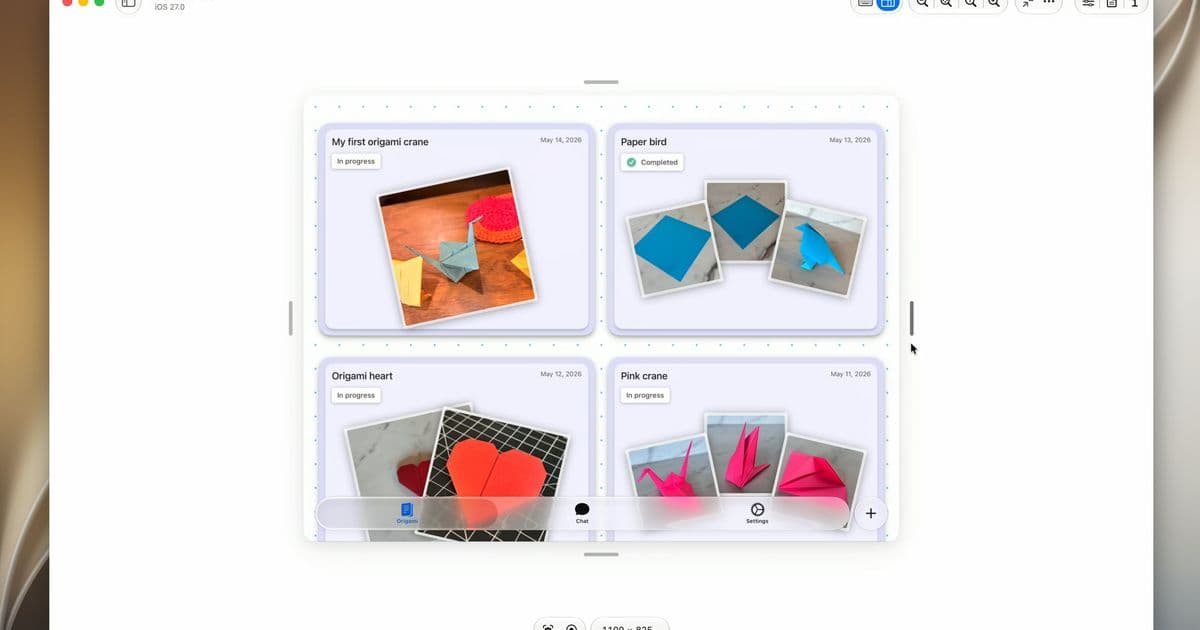
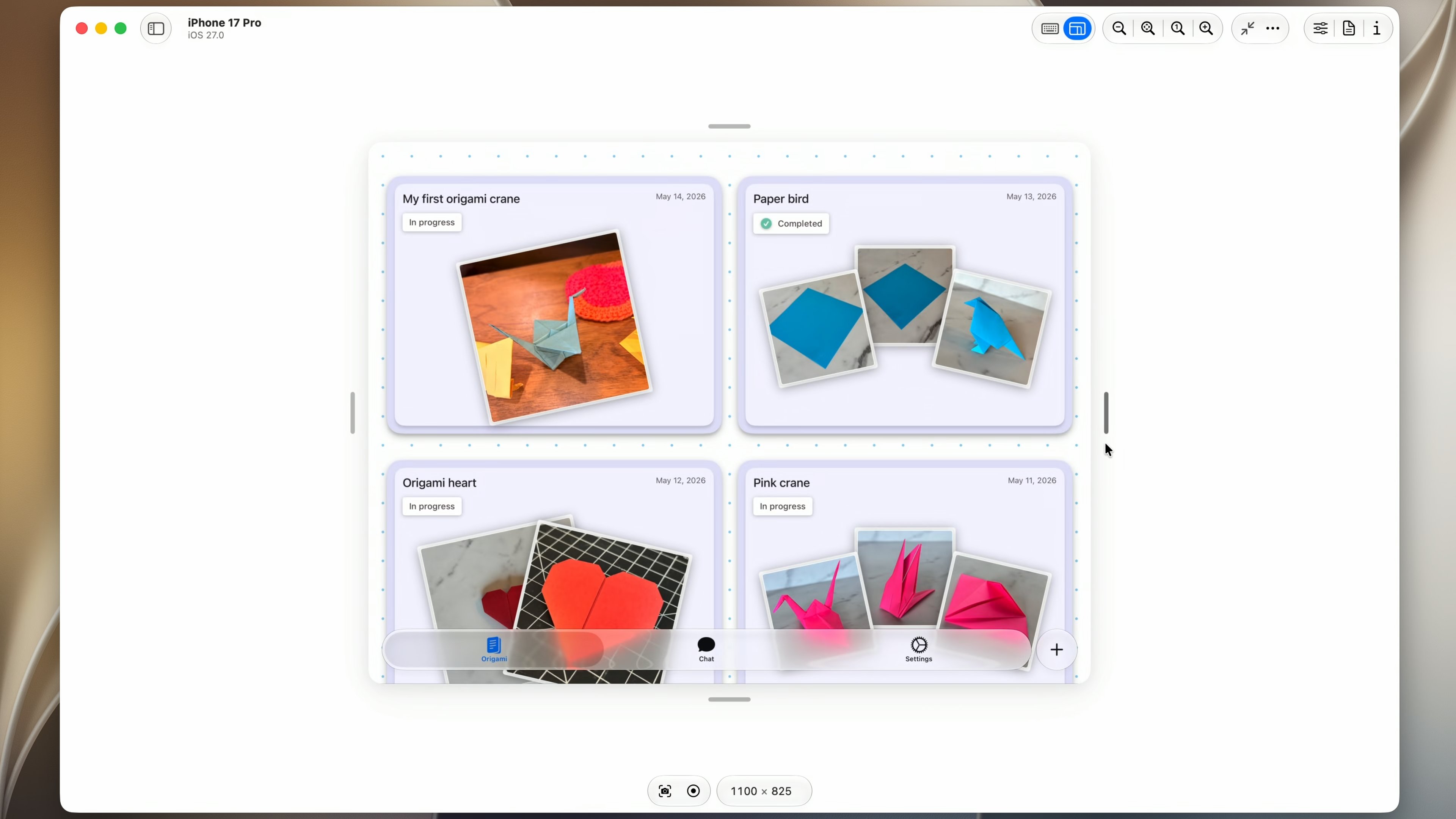
Apple spent its Platform State of the Union this year talking about paper. The sample app built to show off the on-device Foundation Models framework was an origami tool, a place to generate paper craft projects from a photo and follow step-by-step folding tutorials. Maribeth from the Foundation Models team described it as somewhere to "unwind and get creative with paper." It was a warm, low-stakes demo. It was also, read alongside everything else Apple said and shipped during WWDC 2026, a tell.
The most concrete evidence didn't come from the stage. It came from the iOS 27 beta. Sam Gold, a developer who makes a habit of reading Apple's framework strings, surfaced two terms absent from iOS 26: foldState and angleDegrees. The third find is the one that's hard to explain away. A new system key returns the total count of built-in displays on a device. Every iPhone Apple has ever sold reports exactly one. An API that asks whether the answer might be greater than one is not built for the phones currently in pockets.
The resizability drumbeat
If the strings were the quiet signal, the resizability push was the loud one. Apple announced that iOS apps will now resize inside iPhone Mirroring on the Mac, and for the first time the mirrored window can stretch horizontally into a landscape aspect ratio no shipping iPhone produces on its own. Alongside it came a Resizable iOS Simulator, letting developers test layouts across what Apple called "a dynamic range of sizes and aspect ratios." That exact phrasing turned up more than once in a single session, which is the kind of repetition that stops reading like coincidence.
The instruction underneath all of it was blunt: stop designing software for one specific piece of hardware. Design it to adapt across screen sizes and aspect ratios it hasn't met yet. Apple is using the gap between announcing a device and shipping it to get the entire developer community ready in advance.
That approach is a direct response to the competition's mistakes. Android foldable owners have spent roughly seven years cataloguing which apps reflow gracefully across a hinge and which ones letterbox, crash, or freeze mid-rotation. Google has chased developers after the fact with adaptive layout guidance and quality tiers. Apple is doing the inverse, baking the requirement into the SDK before the device exists, so that day-one apps don't embarrass the launch.
What the hardware is, roughly
The device itself has been an open secret for months. The reported name is iPhone Ultra, a book-style foldable with a 7.7- to 7.8-inch inner display and a 5.3- to 5.5-inch cover screen. Unfolded, it lands closer to a 4:3 iPad mini ratio than a widescreen panel, which explains Apple's sudden interest in apps that can fill a near-square canvas. The reported starting price sits around $2,000, putting it above Samsung's Galaxy Z Fold line and well outside the standard iPhone tier.
The timeline points to a September reveal next to the iPhone 18 Pro, with Foxconn reportedly targeting a July mass-production ramp. The staging matters for one more reason. John Ternus takes the CEO chair on September 1, and he oversaw this product's development. He'd walk out to present the foldable as his first major act in the role, both the incoming chief executive and the device's architect. For a company managing a leadership handoff, launching a genuinely new form factor as the opening move is a deliberate framing choice, not a scheduling accident.
Why the soft launch is the smart one
The interesting part isn't that Apple is building a foldable. Foldables have existed for years, and Apple arriving late to a category it didn't invent is a familiar story. The interesting part is the rollout method. Rather than surprise developers in September and spend the following year fielding broken layouts, Apple front-loaded the work. The simulator, the mirroring changes, the API surface, even the choice of an origami app as the marquee demo, all push developers toward building for a fold before anyone outside Cupertino has touched one.
There's a lesson here for anyone shipping a platform alongside hardware. The expensive failure mode isn't a missing feature at launch. It's an ecosystem that wasn't ready, where the flagship experience depends on third-party apps that haven't been updated. Apple's bet is that the months between announcement and availability are worth more spent on developer readiness than on secrecy. The origami demo asked developers to learn the steps: crease, fold, shape. Then Apple shipped the code to prove the fold was coming. The hardware reveal, when it lands, is meant to be the easy part.
Comments
Please log in or register to join the discussion