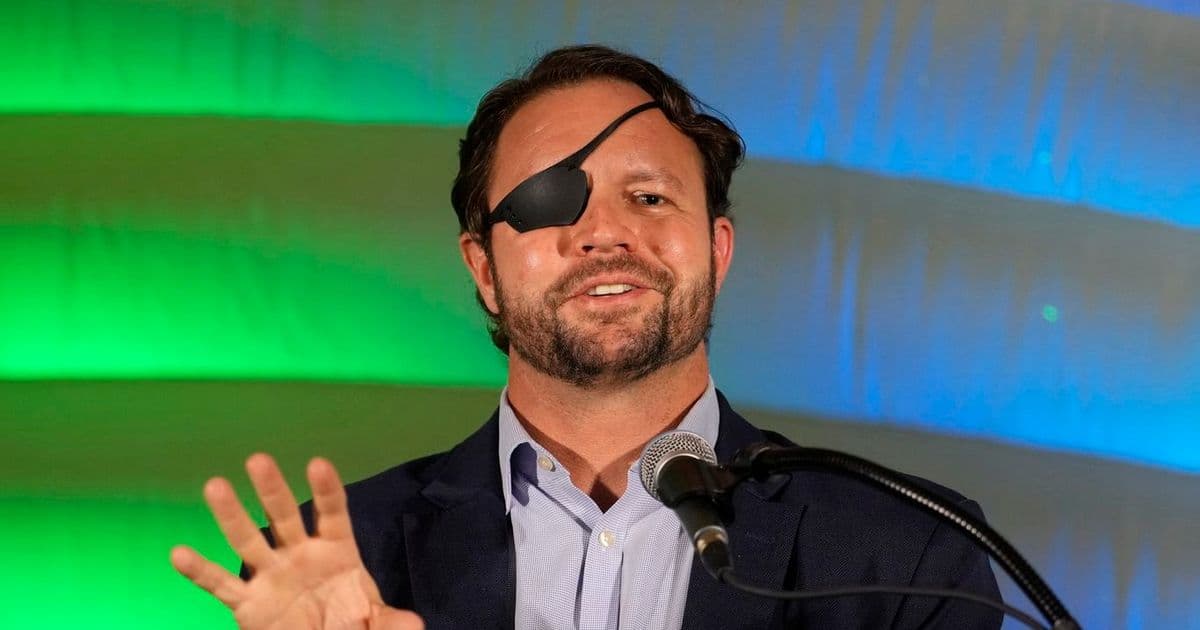
A high-profile political clash between Rep. Dan Crenshaw and billionaire donor Harlan Crow has escalated into a significant shift in Texas Republican politics, with Crow backing a primary challenger to the incumbent congressman.
A bitter feud between Rep. Dan Crenshaw (R-Texas) and billionaire real estate magnate Harlan Crow has culminated in a dramatic political shakeup, with Crow throwing his financial weight behind a primary challenger to the incumbent congressman.
The Origins of the Conflict
The rift between Crenshaw and Crow dates back to 2023, when the two clashed over foreign policy positions and the direction of the Republican Party. Sources familiar with the dispute say the tension began when Crenshaw criticized certain elements of the party's stance on Ukraine aid, a position that put him at odds with Crow, who has been a vocal supporter of robust assistance to Kyiv.
"The fundamental disagreement over foreign policy was just the surface," said a Republican strategist who requested anonymity. "Beneath that were deeper tensions about the party's future and who gets to shape its agenda."
Crow's Financial Intervention
Harlan Crow, heir to the Trammell Crow real estate empire and one of the Republican Party's most prolific donors, has committed to spending at least $10 million in support of Crenshaw's primary challenger, according to campaign finance records and sources close to the effort.
This represents one of the largest individual investments in a House primary race this cycle. Crow's previous political spending has typically focused on Senate races and presidential campaigns, making his involvement in a House primary particularly notable.
"When Harlan Crow decides to get involved in a race, people pay attention," noted political analyst Sarah Longwell. "His track record of backing candidates who align with his vision for the party makes this a significant development."
The Primary Challenge
The beneficiary of Crow's financial backing is Wesley Hunt, a former congressional candidate and Iraq War veteran who narrowly lost to Crenshaw in the 2020 primary. Hunt has positioned himself as a more aligned alternative to Crenshaw, emphasizing his support for traditional conservative positions on foreign policy and party unity.
Hunt's campaign has already seen a surge in fundraising and volunteer support following Crow's commitment. The campaign reports raising over $2 million in the weeks following the announcement, with much of that coming from donors connected to Crow's network.
What This Means for Texas Politics
The intervention by Crow represents a significant realignment within Texas Republican politics. Crenshaw, who gained national prominence as a rising star in the party after his 2018 election, has faced increasing criticism from the party's more conservative wing in recent years.
Political observers note that this race could serve as a bellwether for the direction of the Republican Party in competitive districts. "This isn't just about one congressional seat," said Rice University political scientist Mark Jones. "It's about competing visions for the party's future and who gets to define what it means to be a Republican in 2024."
The Broader Implications
The Crenshaw-Crow feud highlights the growing influence of billionaire donors in shaping primary contests and, by extension, the composition of Congress. With super PACs and dark money groups playing increasingly prominent roles in elections, individual wealthy donors can now significantly impact races that were once determined primarily by local factors.
For Crenshaw, the challenge represents both a political and personal test. Having survived previous primary challenges, he now faces an opponent with substantial financial backing and the resources to mount a serious campaign.
Crenshaw's campaign has responded by emphasizing his military service, his policy achievements, and his independence from special interests. "I answer to my constituents, not to billionaires with agendas," Crenshaw said in a recent campaign statement.
The primary election, scheduled for March 2024, is now shaping up as one of the most closely watched contests of the cycle, with implications that extend far beyond Texas's 2nd Congressional District.
As the race intensifies, both campaigns are preparing for what could be a protracted and expensive battle, with the outcome potentially reshaping not just the district but the broader dynamics of Republican politics in the post-Trump era.
Comments
Please log in or register to join the discussion