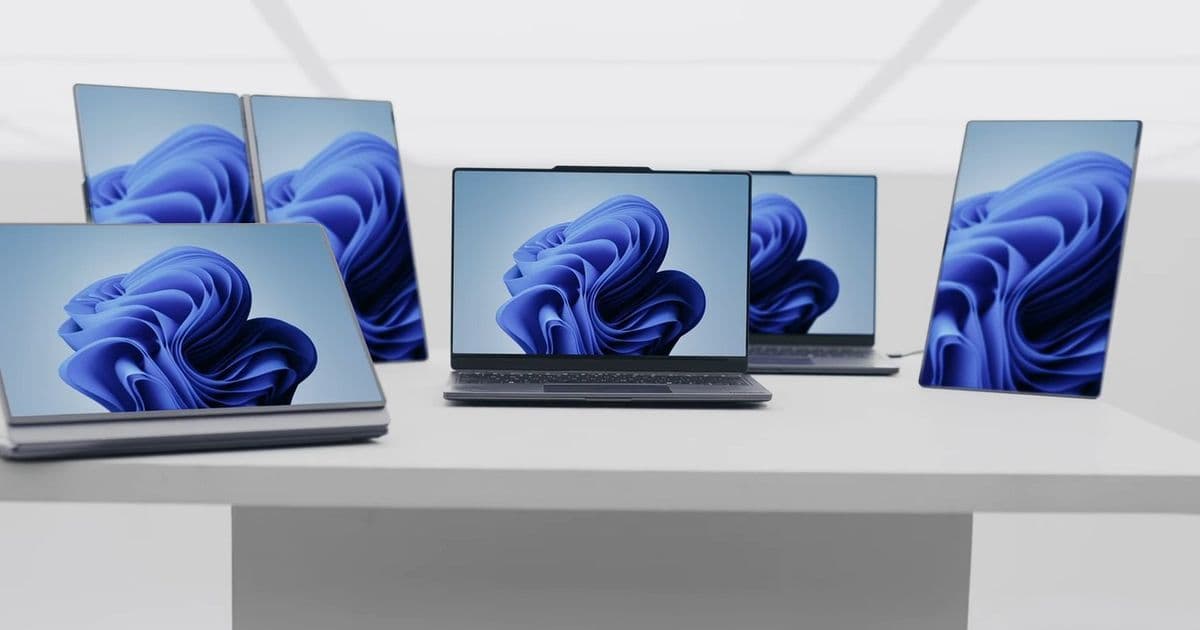
Lenovo's ThinkBook Modular AI PC Concept combines a dual-screen design with a modular port system, offering unprecedented flexibility in how you configure your laptop.
Lenovo is showcasing an intriguing concept laptop at Mobile World Congress that blends several innovative ideas into one device. The ThinkBook Modular AI PC Concept takes inspiration from both the Framework Laptop's modular port system and dual-screen devices like the Asus Zenbook Duo, but adds its own unique twist.
The laptop consists of a slim base unit paired with a primary 14-inch display. What makes this concept particularly interesting is the set of pogo pins on the base that allow you to attach either a removable keyboard or a second screen. This means you can configure the device as a traditional laptop, a dual-screen setup with the keyboard positioned in front, or even use the second screen as a standalone portable monitor.
The second screen is detachable and features a magnetic kickstand that lets you position it in portrait or landscape orientation. Lenovo has also designed it to attach to the back of the laptop lid, enabling screen mirroring for presentations or entertainment purposes. Both screens are 14-inch, 3840 x 2400 pixel, 120 Hz touchscreens with up to 500 nits brightness.
One of the most compelling aspects of this concept is its modular port system. Like Framework's laptops, the ThinkBook features swappable ports, but with a key difference: Lenovo uses an M.2 interface rather than USB Type-C. This means the modules aren't interchangeable with Framework's Expansion Cards, but it still offers significant flexibility. The prototype has one fixed USB Type-C port and two modular slots that can accommodate USB-C, USB-A, or HDMI ports.
This modularity extends beyond just convenience. If a port breaks, you can replace it without replacing the entire motherboard. You can also customize which ports are available on each side of the laptop, and change them later if your needs evolve. This level of flexibility is rare in the laptop market, where port configurations are typically fixed at manufacturing.
In terms of specifications, the prototype features an Intel Core Ultra 7 255H Arrow Lake processor, 32GB of RAM, and a 1TB SSD. The laptop weighs 1.15kg (2.54 pounds) with a single screen or 1.41kg (3.11 pounds) with both screens attached, making it reasonably portable for a dual-screen system.
However, there are some significant caveats. The 33Wh battery is quite small, likely sufficient only for a tech demo rather than real-world use. Lenovo would need to significantly increase battery capacity for a production model. Additionally, while Framework has built its entire business around creating a backward-compatible ecosystem of modules, it's unclear whether Lenovo would commit to producing new modules or supporting this concept long-term.
The ThinkBook Modular AI PC Concept represents an interesting exploration of what's possible when you combine modularity with dual-screen technology. While it's just a concept at this stage, it demonstrates how manufacturers might address the growing demand for customizable, flexible computing devices. Whether Lenovo decides to bring this to market or not, it's encouraging to see more companies experimenting with modular designs that could give users more control over their hardware.
For now, the concept remains just that—a glimpse into potential future directions for laptop design rather than an imminent product. But it raises interesting questions about the future of personal computing and whether modularity could become a more mainstream feature in laptops, particularly as users increasingly demand devices that can adapt to their specific workflows and preferences.
Comments
Please log in or register to join the discussion