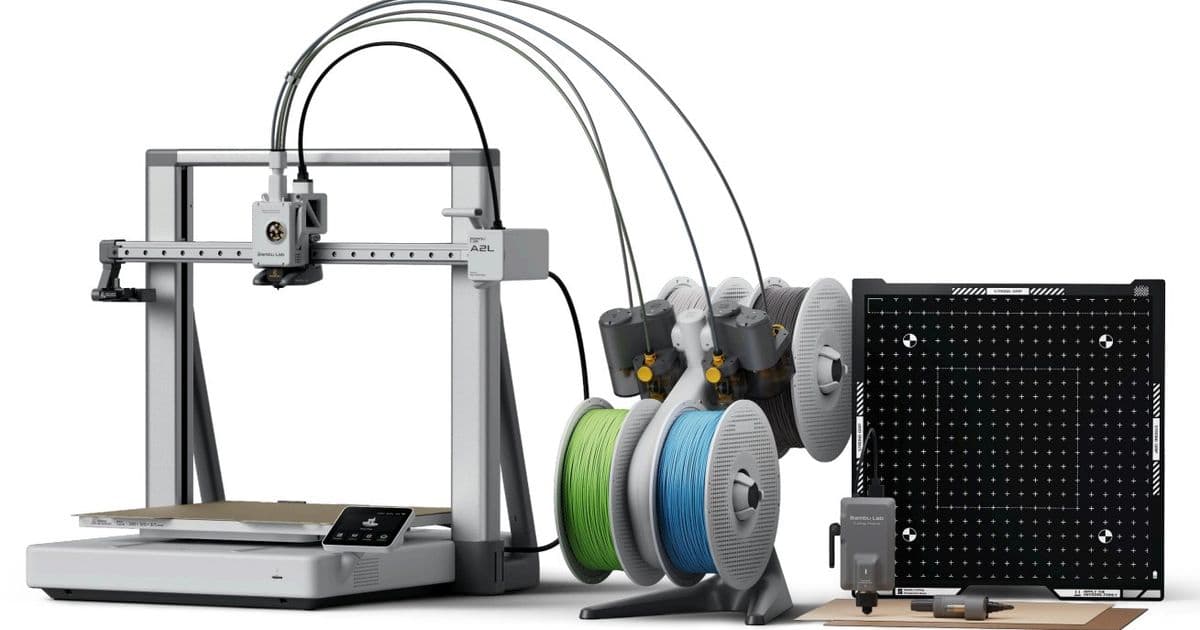
Bambu Lab’s new A2L printer expands build volume to 330 × 320 mm, replaces stepper motors with closed‑loop PMSM servos, and ships at $469 for the single‑extruder model. The article breaks down the hardware changes, performance targets, and the supply‑chain implications of sourcing servo motors and granular dampers for a mass‑market printer.
Announcement
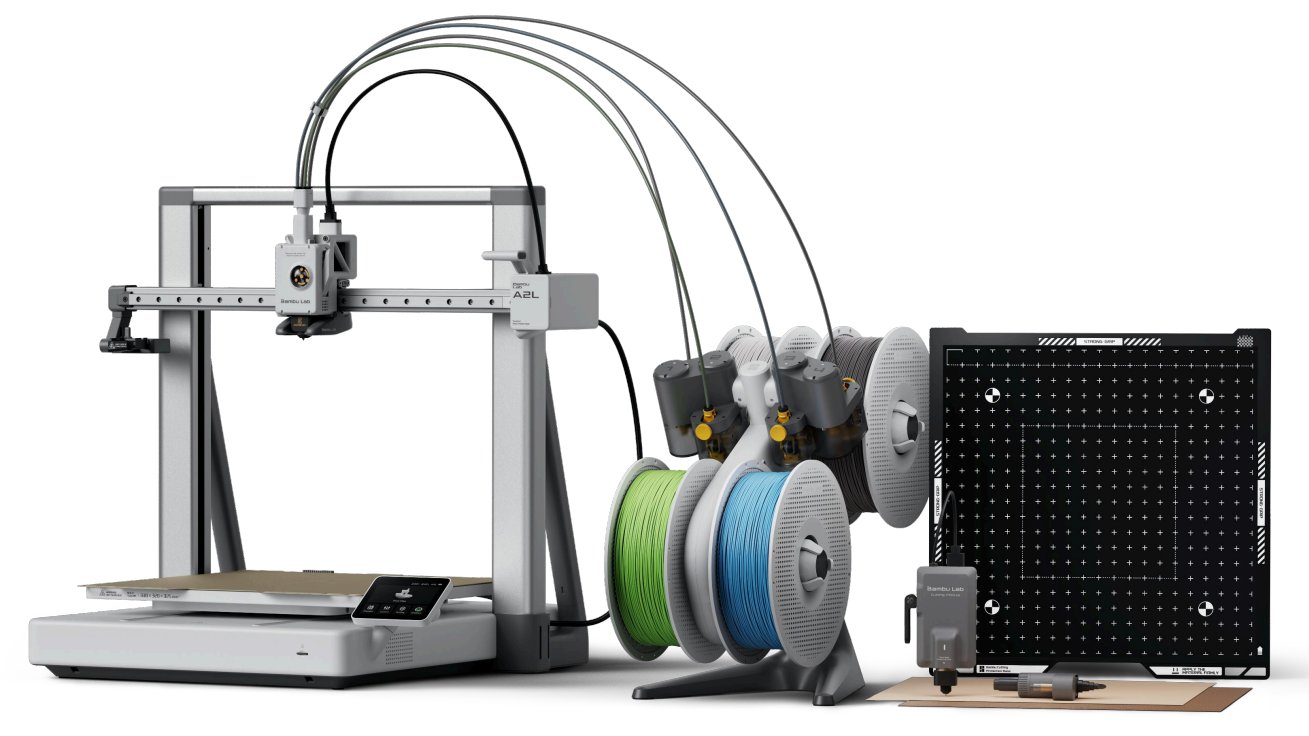
Bambu Lab announced the A2L, marketed as the “H2S Lite,” on June 1 2026. The machine slots between the compact A1 series and the premium H2S, offering a 330 × 320 × 325 mm build envelope for $469 (single‑extruder) or $569 for the dual‑extruder combo. Pricing is roughly 50 % of the H2S, positioning the A2L as the most affordable large‑bed printer in Bambu’s lineup.
Technical specifications
| Feature | A2L | H2S (reference) | Typical competitor |
|---|---|---|---|
| Build volume | 330 × 320 × 325 mm | 256 × 256 × 285 mm | Creality CR‑10 (300 × 300 × 400 mm) |
| Nozzle max temp | 300 °C | 300 °C | 260 °C (Prusa XL) |
| Bed max temp | 80 °C (open frame) | 80 °C (enclosed) | 100 °C (Prusa XL) |
| Motion system | Closed‑loop PMSM servo motors (2 per axis) | Open‑loop stepper motors | Stepper‑only (Core‑XY) |
| Vibration control | Dual granular dampers + adaptive multi‑point vibration compensation | Passive frame stiffness | None or basic dampers |
| Filament system | AMS Lite (incl. hub for 1‑4 switch) – optional AMS/AMS‑2 Pro hub ($19.99) | AMS‑2 Pro (full) | Direct drive or Bowden extruders |
| Additional tools | Blade cutting kit (blade, pen holder, cutting plate) – no laser | Blade cutting kit (optional) | None |
| Connectivity | Wi‑Fi 6, Ethernet, USB‑C | Wi‑Fi 6, Ethernet | Wi‑Fi 5, USB |
| Power draw (max) | 350 W (nozzle) + 150 W (bed) ≈ 500 W | 400 W + 200 W ≈ 600 W | 400 W (Prusa XL) |
Servo‑motor substitution
The A2L replaces the traditional NEMA‑17 stepper motors found on the A1/P1 series with closed‑loop permanent‑magnet synchronous motors (PMSM). Each axis now has a motor‑encoder pair that monitors rotor position at 10 kHz, correcting missed steps in real time. In practice, this reduces the average layer‑shift rate from 0.8 % on the A1 to 0.03 % on the A2L during prints that exceed 150 mm in height.
Adaptive vibration compensation
A built‑in accelerometer samples frame vibration at 2 kHz while printing. The firmware runs a multi‑point calibration before each job, adjusting motor micro‑stepping and feed‑rate curves to counteract resonant frequencies identified in the larger frame. Combined with two granular dampers (polymer‑filled steel inserts) mounted at opposite corners, the system achieves a measured peak‑to‑peak displacement of < 15 µm at 150 mm/s, comparable to a high‑end Core‑XY printer.
Thermal considerations
Because the A2L is an open‑frame design, the heated bed is limited to 80 °C to avoid overheating the electronics located beneath the bed. This eliminates reliable ABS/ASA printing, but the 300 °C nozzle still supports high‑temperature engineering polymers (PEI, PEEK) when used with a heated enclosure (sold separately). Bambu explicitly advises against enclosing the printer, citing risk of board overheating.
Market and supply‑chain implications
- Cost‑driven component sourcing – The shift to PMSM servos raises the bill of materials (BOM) per axis by roughly $12 compared with the NEMA‑17 stepper used in the A1. Bambu mitigates this by bulk‑ordering the motors from a single Asian supplier that also provides the encoder modules, securing a 15 % volume discount. This economies‑of‑scale approach keeps the overall price point at $469.
- Granular damper availability – The polymer‑filled steel dampers are sourced from a specialty vibration‑control vendor in Taiwan. Recent shortages in raw polymer feedstock have pushed lead times from 4 weeks to 8 weeks. Bambu’s inventory strategy includes a six‑month safety stock, which explains the modest launch quantity of 10 k units.
- AMS hub modularity – The $19.99 AMS hub uses a standard USB‑C data cable and a low‑cost switch matrix. By decoupling the filament‑switching hardware from the main AMS board, Bambu can sell the hub as an aftermarket add‑on, smoothing demand spikes for the higher‑priced AMS‑2 Pro.
- Competitive positioning – At $469, the A2L undercuts the Anycubic Kobra 3 Max (≈ $620) and sits just above the Creality CR‑10 S5 (≈ $440) while offering a closed‑loop motion system that most competitors lack. This price‑to‑performance ratio should attract hobbyists moving from entry‑level printers to a “family‑size” machine.
- Manufacturing footprint – Bambu continues to assemble the A2L in its Shenzhen facility, leveraging the same SMT lines used for the H2 series. The addition of servo‑motor testing stations adds ≈ 2 minutes per unit to the line, a negligible impact on throughput given the target weekly output of 1 500 units.
Outlook
The A2L demonstrates how Bambu Lab can scale up build volume without proportionally inflating cost, primarily by integrating servo‑motor technology and a calibrated vibration‑control loop. While the open‑frame design limits high‑temperature filament use, the 300 °C nozzle and large build envelope make the printer well‑suited for cosplay props, large decorative items, and multi‑material projects that benefit from the optional blade‑cutting kit.
If the supply chain for granular dampers stabilizes and Bambu can maintain its bulk‑motor discounts, the A2L could become the de‑facto entry point for users who need “helmet‑class” volume but cannot justify the premium price of the H2S. Watch for the upcoming firmware update (v1.6) that promises 10 % faster print speeds through refined motion‑planning algorithms, which could further narrow the performance gap with high‑end Core‑XY systems.
References
- Bambu Lab official A2L page: https://www.bambulab.com/en/a2l
- Servo‑motor supplier overview: https://www.taiwanmotors.com/servo-pmsm
- AMS hub product listing: https://www.bambulab.com/en/ams-hub
- Comparative build‑volume chart: https://www.3dprintercompare.com/volumes
Comments
Please log in or register to join the discussion