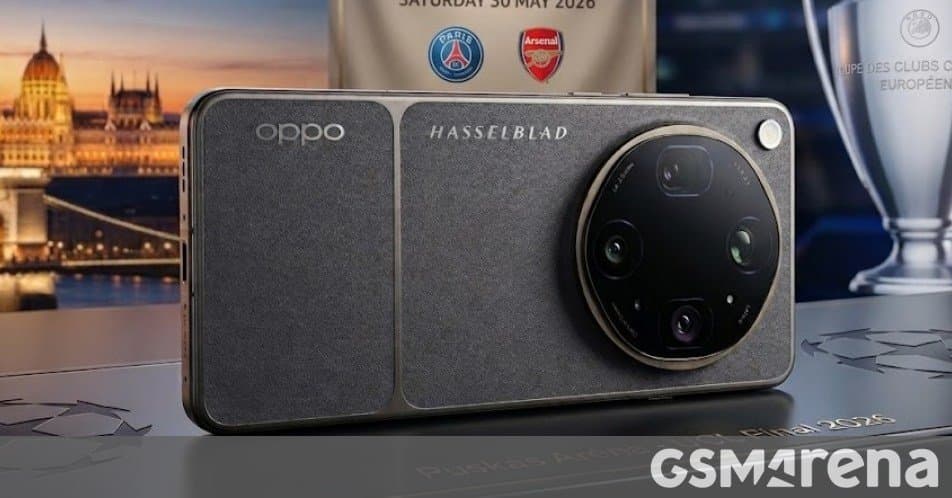
Oppo’s Find X9 Ultra was put to the test at the UEFA Champions League final in Budapest, using the Hasselblad Earth Explorer Kit’s 300 mm teleconverter to shoot the stadium, city landmarks, and the match itself. The photo story shows how the phone performs in bright daylight, low‑light interiors, and high‑speed sports scenarios, while highlighting the device’s place in Oppo’s broader ecosystem.
A photo story from the UCL final in Budapest
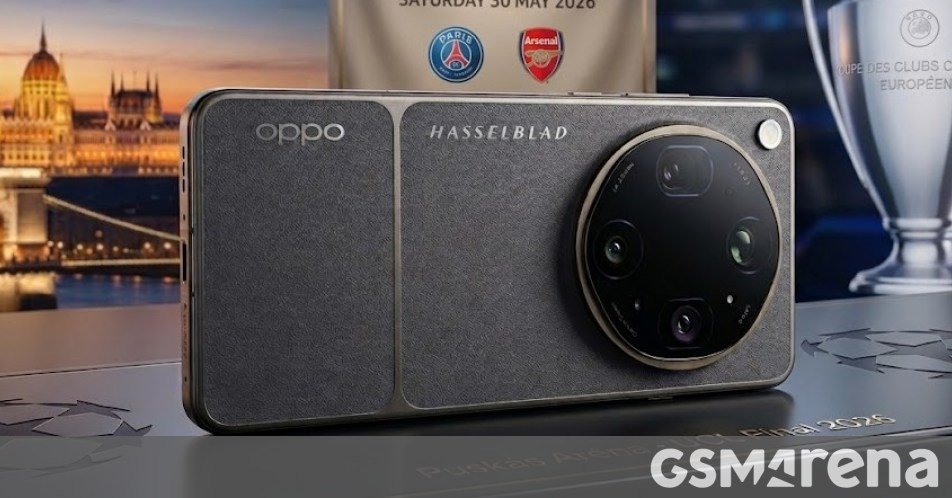
Last weekend I travelled to Budapest for the UEFA Champions League final – Paris Saint‑Germain versus Arsenal – thanks to Oppo’s partnership with UEFA. The trip gave me a perfect chance to see how the Oppo Find X9 Ultra handles real‑world shooting, especially when paired with the Hasselblad Earth Explorer Kit and its 300 mm teleconverter.
First impressions around the city
Before the match I explored the capital’s historic sites. The Fisherman's Bastion offered sweeping city views, while St. Stephen’s Basilica provided a dimly lit interior that tested the phone’s low‑light processing. The Liberty Bridge’s Art Nouveau arches and the Danube‑front Parliament building lit up at night gave a variety of colour and contrast challenges. All images were captured straight from the phone in the default JPG format, with no post‑processing applied.
Stadium action with the teleconverter
At the Puskás Arena the 300 mm teleconverter became essential. I used it for most stills and video clips, keeping the phone steady on a small monopod. The phone’s 50 MP primary sensor, combined with Hasselblad‑tuned colour science, reproduced the vibrant green of the pitch and the bright stadium lighting without noticeable clipping. Fast‑moving moments – Kai Havertz’s early goal, Ousmane Dembélé’s penalty, and the final shoot‑out – were captured with crisp detail, thanks to the sensor’s 1/1.43‑inch size and 1.9 µm pixel pitch.
How the Find X9 Ultra fits into Oppo’s ecosystem
The phone runs ColorOS 16.0, which now includes the AI‑driven Mind Pilot that suggests optimal shooting modes based on scene detection. When I switched to the Sports preset, the software automatically boosted the frame rate to 60 fps for video and applied motion‑blur reduction for stills. The Live Space feature kept the background smooth while the subject stayed sharp – useful for the crowded pre‑match fan zones.
Because the Find X9 Ultra is part of Oppo’s Khronos Creator Kit, I could instantly back up the raw files to the cloud and edit them on my laptop using the Oppo Photo Lab app. The seamless hand‑off demonstrates how the device is not just a camera but a hub in Oppo’s broader hardware and software ecosystem.
Quick technical rundown
| Spec | Detail |
|---|---|
| Sensor | 50 MP (1/1.43") Sony IMX989 |
| Lens | f/1.7, 23‑120 mm (35 mm equiv.) |
| Teleconverter | Hasselblad Earth Explorer Kit, 300 mm (effective) |
| Video | 8K 30 fps, 4K 60 fps |
| OS | Android 14 with ColorOS 16.0 |
| AI features | Mind Pilot, Live Space, Nightscape |
| Battery | 5000 mAh, 65 W SuperVOOC fast charge |
What the images show
- Daylight cityscapes: Accurate colour reproduction, high dynamic range, and detail in both sky and architecture.
- Low‑light interiors: Minimal noise at ISO 640, thanks to the sensor’s large pixels and AI‑noise reduction.
- Sports action: Sharp subjects with clean edges, even when using the teleconverter at 300 mm.
- Night‑time stadium: Balanced highlights on the floodlights and preserved shadow detail on the crowd.
The photos prove that the Find X9 Ultra can serve both as a travel companion and a sports‑photography tool, especially when you have the Earth Explorer Kit attached.
Related reading
Feel free to share your thoughts on the images in the comments below!
Comments
Please log in or register to join the discussion