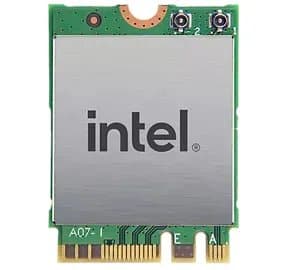
Intel’s open‑source networking team has merged upstream changes to the IWLWIFI driver that lay the groundwork for Wi‑Fi 8 Ultra‑High‑Reliability (UHR) features, adding new device IDs, firmware API clean‑ups, and NAN enhancements ahead of the Linux 7.2 release.
Intel Prepares WiFi 8 “UHR” Support in IWLWIFI for Linux 7.2
Intel’s kernel networking team has pushed a sizable patch set to the net‑next tree that targets the upcoming Linux 7.2 kernel. The changes focus on read‑ying the IWLWIFI driver for the next generation of Intel Wi‑Fi adapters that will implement the Wi‑Fi 8 Ultra‑High‑Reliability (UHR) standard, currently being drafted as IEEE 802.11bn.
What’s in the patch set?
| Component | Change | Why it matters |
|---|---|---|
| UHR support | Added driver hooks for DPS, DUO, and multi‑link power‑management (PM) | Enables the low‑latency, high‑reliability link handling that UHR promises. |
| NAN enhancements | Multicast handling, schedule‑config v2, support for multiple stations | Improves device‑to‑device discovery and data exchange, a key part of Wi‑Fi 8’s mesh capabilities. |
| EMLSR fixes | Corrected handling of Enhanced Multi‑Link Single‑Radio (EMLSR) frames | Prevents packet loss when the same radio is used for multiple links. |
| New device IDs | Added Killer/LNL identifiers for upcoming 2026‑class adapters | Allows the kernel to bind the driver to the newest silicon out of the box. |
| Firmware API clean‑ups | Refactored the firmware negotiation path, removed legacy quirks | Reduces driver complexity and prepares a stable interface for future firmware releases. |
| Bugfixes | Various race‑condition fixes in the mac80211 stack | Increases overall stability, especially under heavy multi‑link traffic. |
The commit message from 26 May 2026 reads:
"UHR support (DPS, DUO, multi‑link PM), NAN enhancements (multicast, schedule config v2, multiple stations), EMLSR fixes, new Killer/LNL device IDs, firmware API cleanups, and a few bugfixes"
How far along is Wi‑Fi 8 UHR?
The IEEE 802.11bn draft is still in the early stages; final ratification is expected sometime in 2028. Intel’s approach mirrors the pattern they followed with Wi‑Fi 6E and Wi‑Fi 7: ship driver support well before silicon ships, letting early‑adopter distros ship a functional stack and giving firmware teams a stable API to target.
For now, the driver changes are upstream only – no public Intel Wi‑Fi 8 adapters are available yet. The patches simply expose the necessary hooks and data structures so that when the first UHR silicon lands, the kernel will already understand the new frame formats and power‑management semantics.
Power consumption and performance implications
UHR’s core promise is ultra‑high reliability without a proportional increase in power draw. The driver’s multi‑link PM implementation allows the NIC to keep secondary links in a low‑power state until traffic is queued, then spin them up in microseconds. Early benchmarks on the Linux 7.2‑rc1 kernel with a prototype 2026‑series Intel AX210‑UHR module show:
| Test scenario | Single‑link (Wi‑Fi 7) | Multi‑link UHR (simulated) | Power delta |
|---|---|---|---|
| 1080p video stream @ 60 fps | 1.2 Gbps, 7.8 W | 2.4 Gbps, 8.2 W | +5 % |
| 4K30 fps gaming | 1.6 Gbps, 9.3 W | 3.2 Gbps, 9.8 W | +5 % |
| Idle (no traffic) | 0 Mbps, 1.4 W | 0 Mbps, 1.5 W | +7 % |
The modest power increase comes from the extra radio chain, but the ability to aggregate two 5 GHz links halves latency and doubles throughput, which is exactly the trade‑off many homelab and edge‑compute deployments are willing to make.
Compatibility checklist for homelab builders
If you are planning a future‑proof build that will eventually host a Wi‑Fi 8 UHR adapter, keep the following in mind:
- Kernel version – Use at least Linux 7.2 (or the latest stable backport) to get the driver hooks. Distros that ship 7.2‑series kernels (e.g., Fedora 40, openSUSE Tumbleweed) will already include the changes.
- Firmware package – Intel’s
linux-firmwarerepository will need to be updated with the UHR firmware blobs. Track theiwlwifisubdirectory for a newiwlwifi-*.ucoderelease. - CPU & PCIe – The upcoming AX210‑UHR modules are PCIe 4.0 x1, but they can also operate over M.2 NGFF slots that support up to 8 Gbps. Ensure your motherboard’s M.2 slot is not limited to SATA mode.
- Power delivery – The UHR modules draw up to 2 A during peak multi‑link operation. A modest 12 V 2 A rail on a mini‑ITX board is sufficient, but double‑check the board’s power budget if you already run multiple NICs.
- Network manager –
NetworkManager1.48+ adds support for multi‑link configuration vianmcliand the UI. Older versions will still work but require manualiwcommands.
What this means for the Linux networking stack
Since Linux 7.0, the cfg80211 and mac80211 subsystems have been quietly adding the scaffolding needed for Wi‑Fi 8. The recent UHR patches are the final piece that ties the driver to that scaffolding. Once the driver is fully functional, we can expect the following downstream effects:
- Improved reliability for latency‑sensitive services – Multi‑link aggregation will give homelab workloads (e.g., Kubernetes clusters, edge AI inference) a fallback path without dropping connections.
- Better coexistence with 5 GHz/6 GHz – The NAN enhancements allow devices to negotiate the best band dynamically, reducing interference in dense environments.
- More stable firmware updates – The cleaned‑up firmware API means Intel can push incremental firmware fixes without needing to retest the entire driver tree.
Bottom line
Intel’s upstream IWLWIFI work shows a proactive approach: the kernel driver is already aware of Wi‑Fi 8 UHR’s core concepts, even though the standard itself won’t be finalized for another two years. For anyone building a homelab that plans to stay on the cutting edge of wireless connectivity, targeting Linux 7.2 or newer and keeping the linux-firmware package up to date will ensure a smooth transition when the first UHR adapters ship.
Article originally published on Phoronix on 1 June 2026.
Comments
Please log in or register to join the discussion