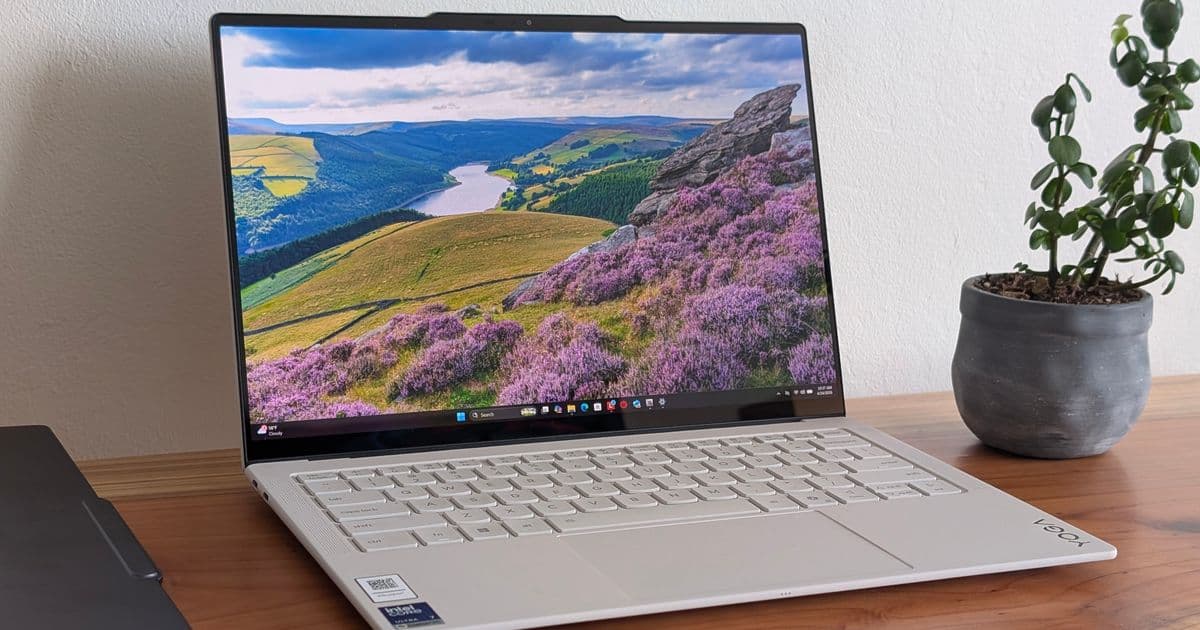
Lenovo's Yoga Slim 7 Ultra 14 Aura challenges Dell's XPS 14 with significant weight savings but compromises on cooling, expandability, and build rigidity.
Lenovo Yoga Slim 7 Ultra 14 Aura: Lighter Competitor to Dell XPS 14 with Trade-offs
Lenovo has entered the premium ultrabook arena with the Yoga Slim 7 Ultra 14 Aura, a direct competitor to Dell's refreshed XPS 14. This new laptop distinguishes itself through an impressively lightweight design, shedding over 500 grams compared to its Dell counterpart while maintaining similar performance credentials with Intel's latest Core Ultra X7 processors. However, this dramatic weight reduction comes with several compromises that potential buyers should carefully consider.
What's New: Lightweight Design Meets Premium Specifications
The Yoga Slim 7 Ultra 14 Aura represents Lenovo's answer to the growing demand for ultraportable laptops without sacrificing performance. At its core, the laptop features Intel's new Panther Lake CPU options, including the Core Ultra 7 355 processor, paired with Intel's integrated Graphics 4 Xe3 PTL. The display matches the Dell XPS 14 with a vibrant 1800p OLED touchscreen, offering similar visual quality and color accuracy.
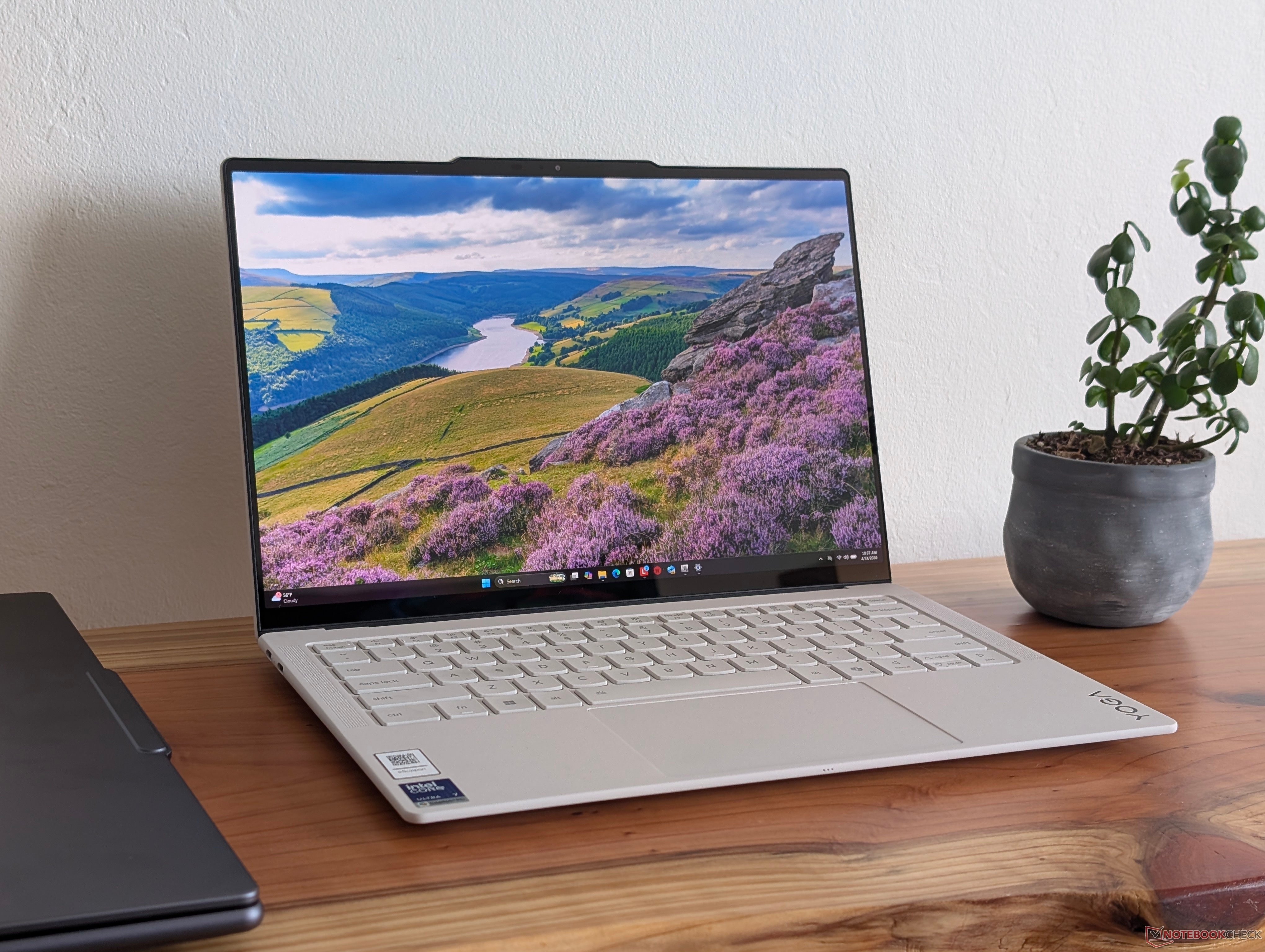
The most striking feature is the weight advantage. The Yoga Slim 7 Ultra 14 Aura weighs approximately 35% less than the Dell XPS 14, making it one of the lightest laptops in its class to feature the Core Ultra X7 processor. This reduction in weight is achieved through extensive use of lightweight materials and a more compact internal design.
Lenovo has maintained the premium aesthetics expected in this category, with an aluminum chassis that, while thinner than the competition, still projects a sophisticated appearance. The inclusion of a touchscreen display adds versatility for users who prefer direct interaction with their content.
How It Compares: Performance Parity with Noticeable Trade-offs
When placed side-by-side with the Dell XPS 14, the Yoga Slim 7 Ultra 14 Aura reveals both its strengths and weaknesses. Both laptops deliver comparable performance thanks to identical processor options and similar display technology. However, the implementation of these components differs significantly between the two machines.
Cooling System Performance
The most noticeable difference between these two ultrabooks lies in their thermal management. While both machines remain quiet during basic tasks like web browsing or video streaming, the Yoga Slim 7 Ultra 14 Aura shows its limitations under heavier loads.
Our testing revealed substantial differences in noise levels:
- Idle noise: Lenovo (25.5 dB(A)) vs Dell (23 dB(A))
- Load average: Lenovo (44.4 dB(A)) vs Dell (30.8 dB(A))
- Cyberpunk 2077 (ultra settings): Lenovo (43.4 dB(A)) vs Dell (35.4 dB(A))
- Maximum load: Lenovo (45.5 dB(A)) vs Dell (45.9 dB(A))
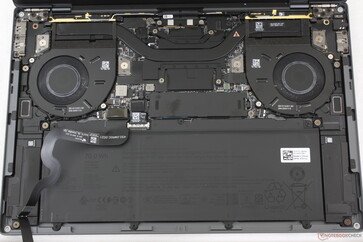
The Yoga Slim 7 Ultra 14 Aura reaches higher noise levels sooner during intensive tasks, with the fans becoming noticeably audible during moderate workloads that the Dell handles quietly. This suggests that Lenovo's lighter cooling solution, necessary to achieve the weight savings, has less thermal headroom than the more robust system in the Dell XPS 14.
Storage Expansion Limitations
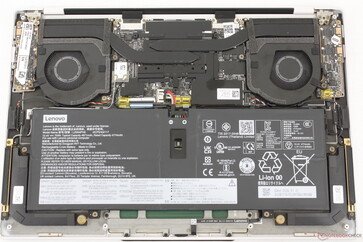
Another significant compromise is the storage configuration. The Yoga Slim 7 Ultra 14 Aura supports only M.2 2242 SSDs or drives up to 42mm in length, a limitation imposed by the compact chassis design. In contrast, the Dell XPS 14 accommodates standard M.2 2280 SSDs up to 80mm long, offering users much greater flexibility for future upgrades.
This limitation means users must be more selective when purchasing or upgrading storage for the Yoga Slim 7 Ultra 14 Aura. The selection of 2242 drives is more limited and often more expensive per gigabyte than their 2280 counterparts, potentially increasing long-term ownership costs for users who require additional storage capacity.
Build Quality Considerations
The dramatic weight reduction also affects the laptop's build rigidity. While the Yoga Slim 7 Ultra 14 Aura doesn't feel cheap, its thinner aluminum chassis exhibits more flex than the Dell XPS 14, particularly around the corners and along the center of the keyboard deck. The Dell's heavier, thicker construction results in a more solid and rigid feel that may appeal to users who prioritize durability above all else.
Additional drawbacks noted in our review include softer speakers compared to the XPS 14 and some differences in battery life performance. However, these differences are less significant than the thermal and expandability limitations.
Who It's For: The Weight-Conscious Professional
Despite its compromises, the Yoga Slim 7 Ultra 14 Aura presents a compelling option for specific user profiles. The laptop is ideal for professionals who prioritize portability above all else—frequent travelers, students moving between classes, or anyone who carries their laptop throughout the day will appreciate the substantial weight savings.
The Yoga Slim 7 Ultra 14 Aura makes particular sense for users who:
- Value lightest-possible weight over absolute performance
- Primarily use their laptop for productivity tasks rather than intensive workloads
- Rarely need to upgrade or expand storage after purchase
- Don't mind moderate fan noise during demanding tasks
- Prefer direct touchscreen interaction over traditional input methods
For users who require maximum performance under sustained loads, extensive storage options, or the most robust build quality, the Dell XPS 14 remains the more sensible choice despite its additional weight. The extra 500+ grams translates to better thermal headroom, more upgradeability, and greater durability—factors that may justify the heft for power users and professionals with less stringent mobility requirements.
Ultimately, the Lenovo Yoga Slim 7 Ultra 14 Aura demonstrates that significant weight savings are possible in the ultrabook category, but they come at the cost of several practical compromises. The success of this design depends entirely on whether a user's priorities align with Lenovo's vision of ultimate portability over other considerations.
Comments
Please log in or register to join the discussion