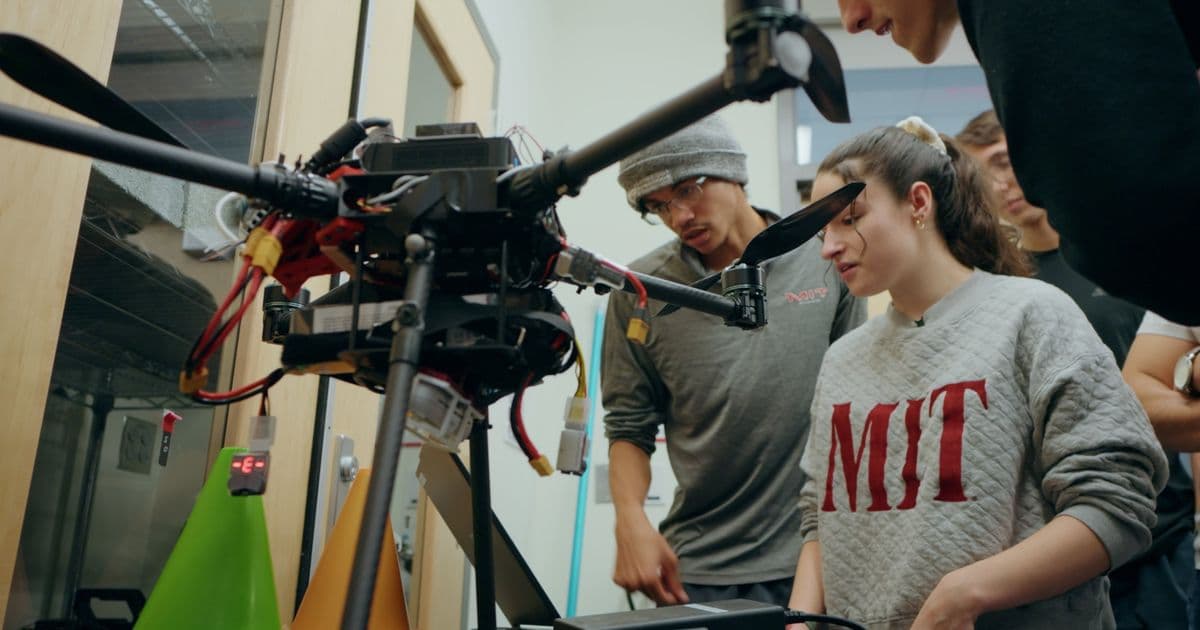
In a new MIT course, students design and test software for autonomous flight vehicles that can explore unfamiliar terrain without human intervention.
In a new MIT course, students are tackling one of aerospace engineering's most challenging problems: building autonomous systems that can navigate and operate in completely unknown environments. The class, 16.85 Autonomy Capstone (Design and Testing of Autonomous Vehicles), pushes students to develop software that allows drones to explore unfamiliar terrain, identify obstacles, and make critical decisions entirely on their own.
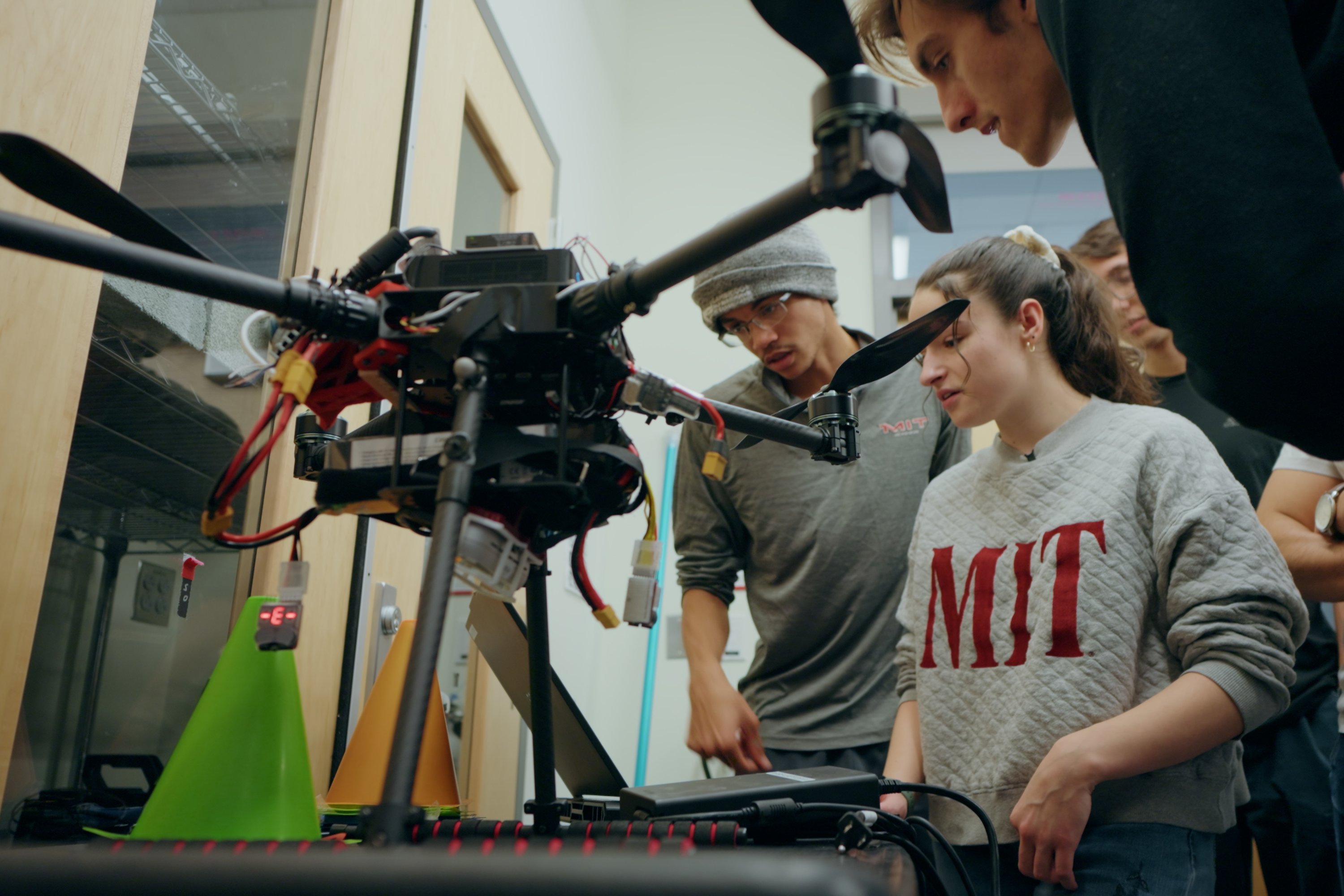
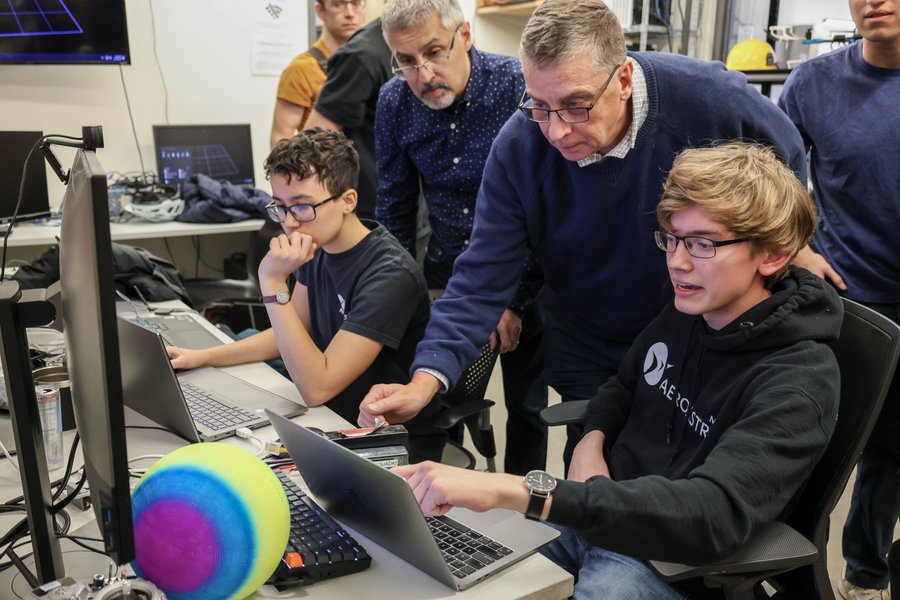
The course, developed by Professors Nicholas Roy and Jonathan How, builds on the foundations of robotics education at MIT, applying principles of autonomous navigation to flight systems. Students work in large teams to design, implement, deploy, and test complete software architectures for flying autonomous systems, with applications ranging from urban air mobility to extraterrestrial exploration.
The Challenge of Autonomous Flight
Flying on Mars—or any other world—represents one of the most extraordinary challenges in aerospace engineering. An autonomous spacecraft operating millions of miles from Earth must navigate unfamiliar and changing environments, avoid obstacles, land on uncertain terrain, and make decisions entirely on its own. Every maneuver depends on careful perception, planning, and control systems that are fault-tolerant, allowing the craft to recover if something goes wrong.
"This problem is in no way solved, in industry or even in research settings," says Nicholas Roy, the Jerome C. Hunsaker Professor in MIT's Department of Aeronautics and Astronautics (AeroAstro). "You've got to bring together a lot of pieces of code, software, and integrate multiple pieces of hardware. Putting those together is not trivial."
From Theory to Flight
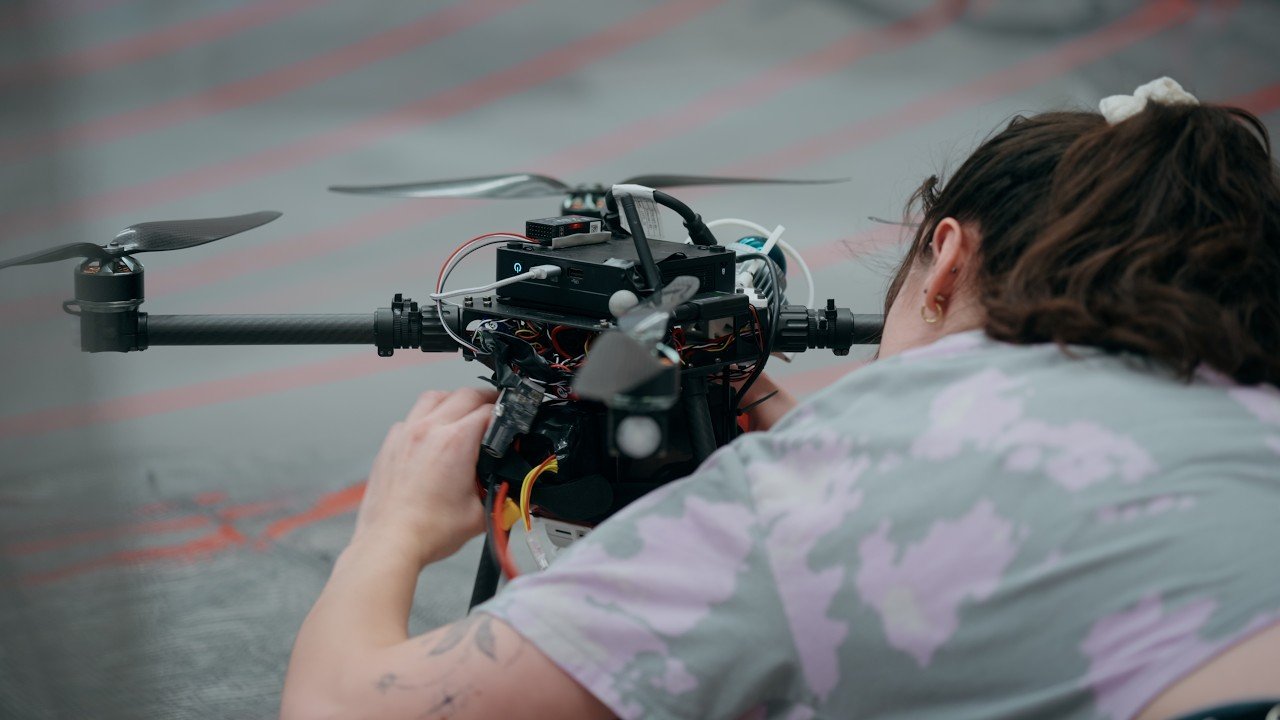
The course applies principles from class 16.405 (Robotics: Science and Systems), which introduces students to working with complex robotic platforms and autonomous navigation through ground vehicles with pre-built software. In 16.85, students start with a basic quadrotor drone and build their own navigation systems from scratch.
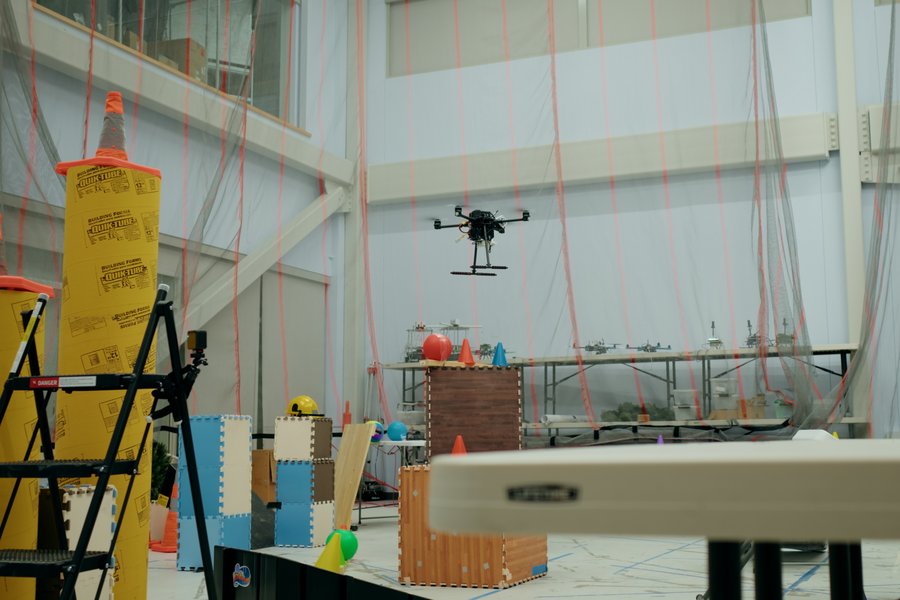
The vehicles are tested on an obstacle course featuring dubious landing pads and uncertain terrain in AeroAstro's Kresa Center for Autonomous Systems. Students work in large teams—for this first run, two teams of seven, nicknamed the SLAMdunkers and the Spelunkers—designed to mirror real-world missions where coordination across roles is essential.
"The vehicles need to be able to differentiate between all these hidden risks that are in the mission and the environment that they're in and still survive," says How. "We really want the students to learn how to make a system that they have confidence in."
Engineering Collaboration
A mission of this magnitude is far too complex for any one engineer to tackle alone, but that too poses a challenge for large teams. "The hardest problems these days are coordination problems," says Andrew Fishberg, a graduate student in the Aerospace Controls Laboratory and one of three teaching assistants for the course.
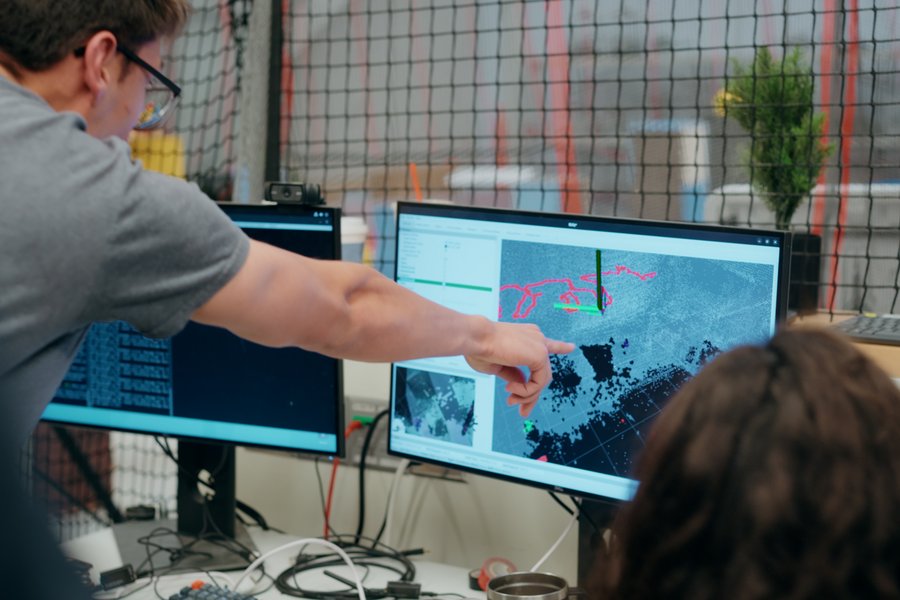
"To use the robotics term, a team of this size is something of a heterogeneous swarm. Not everyone has the same skill set, but everyone shows up with something to contribute, and managing that together is a challenge."
The challenge asks students to apply multiple types of "systems thinking" to the task. Relationships, interdependencies, and feedback loops are critical to their software architecture, and equally important in how students communicate and coordinate with their teammates.
"Writing the reports and communicating with a team feels like overhead sometimes, but if you don't communicate, you have a team of one," says Fishberg. "We don't have these 'solo inventor' situations where one person figures everything out anymore—it's hundreds of people building this huge thing."
Expanding Applications
Students in the class say they are eager to enter the rapidly evolving field, working with unconventional tools and vehicles that go beyond traditional applications. "We continue to send rovers to extraterrestrial bodies. But there is an increasing interest in deploying unmanned systems to explore Earth," says Roy. "There's lots of places on Earth where we want to send robots to go and explore, places where it's hazardous for humans to go."
That expanding set of applications is exactly what draws students to the field. "I was really excited for the idea of a new class, especially one that was focused on autonomy, because that's where I see my career going," says senior Norah Miller. "This class has given me a really great experience in what it feels like to develop software from zero to a full flying mission."
The Capstone Experience
The Design and Testing of Autonomous Vehicles course offers a unique perspective for instructors and TAs who have known many of the students throughout their undergraduate careers. As a capstone, it provides an opportunity to see that growth come full circle.
"A couple years ago we're solving differential equations, and now they're implementing software they wrote on a quadrotor in the high bay," says How.
After weeks of learning, building, testing, refinement, and finally, flight, the results reflected the goals of the course. "It was exactly what we wanted to see happen," says Roy. "We gave them a pretty challenging mission. We gave them hardware that should be capable of completing the mission, but not guaranteed. And the students have put in a tremendous amount of effort and have really risen to the challenge."
The course represents a critical step in preparing the next generation of aerospace engineers for a field where autonomous systems will play an increasingly vital role, from urban air mobility to the exploration of other worlds. As students gain confidence in building systems they can trust, they're also building the foundation for technologies that could one day explore the most challenging environments in our solar system and beyond.
Comments
Please log in or register to join the discussion