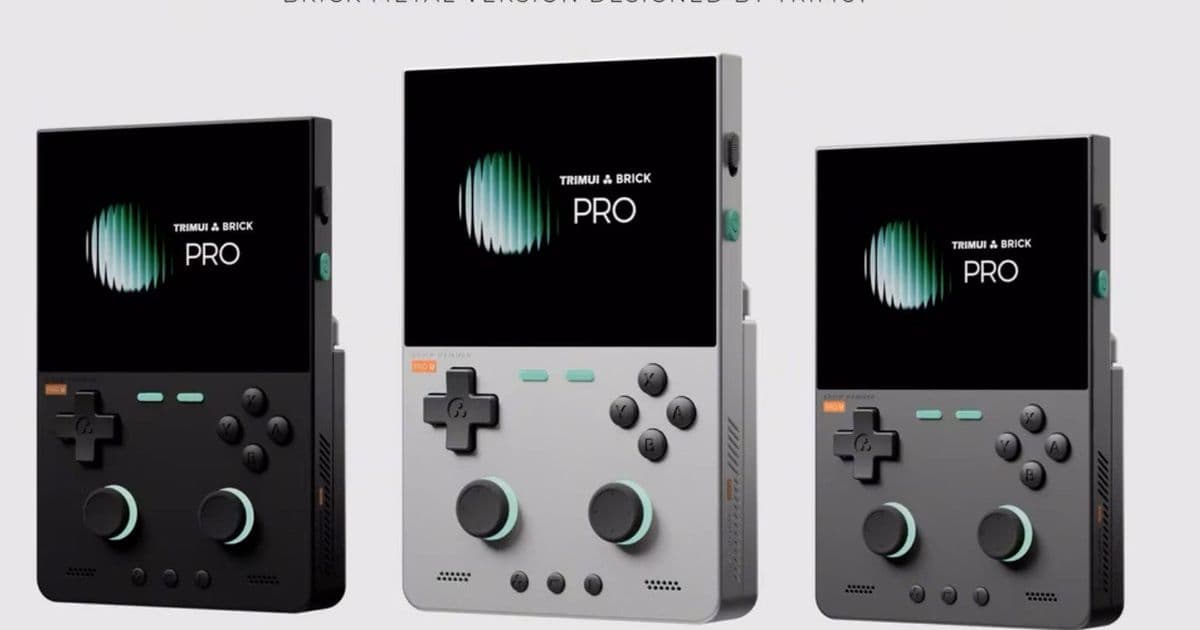
TrimUI's teaser video locks in specs for its new vertical pair. The Brick Hammer Pro U goes premium with a Snapdragon G2 Gen 1 and a metal shell, while the Brick Pro keeps things cheap with an Allwinner A133p and Linux.
TrimUI has stopped teasing and started confirming. A new official video names two upcoming vertical handhelds, the TrimUI Brick Pro and the TrimUI Brick Hammer Pro U, and hands over enough of their spec sheets to tell exactly where each one sits. One is built to compete with the better Android retro handhelds. The other is a budget Linux device aimed at people who just want clean emulation up through the PlayStation era without spending much. They look nearly identical, which makes the internals the whole story.
What's new
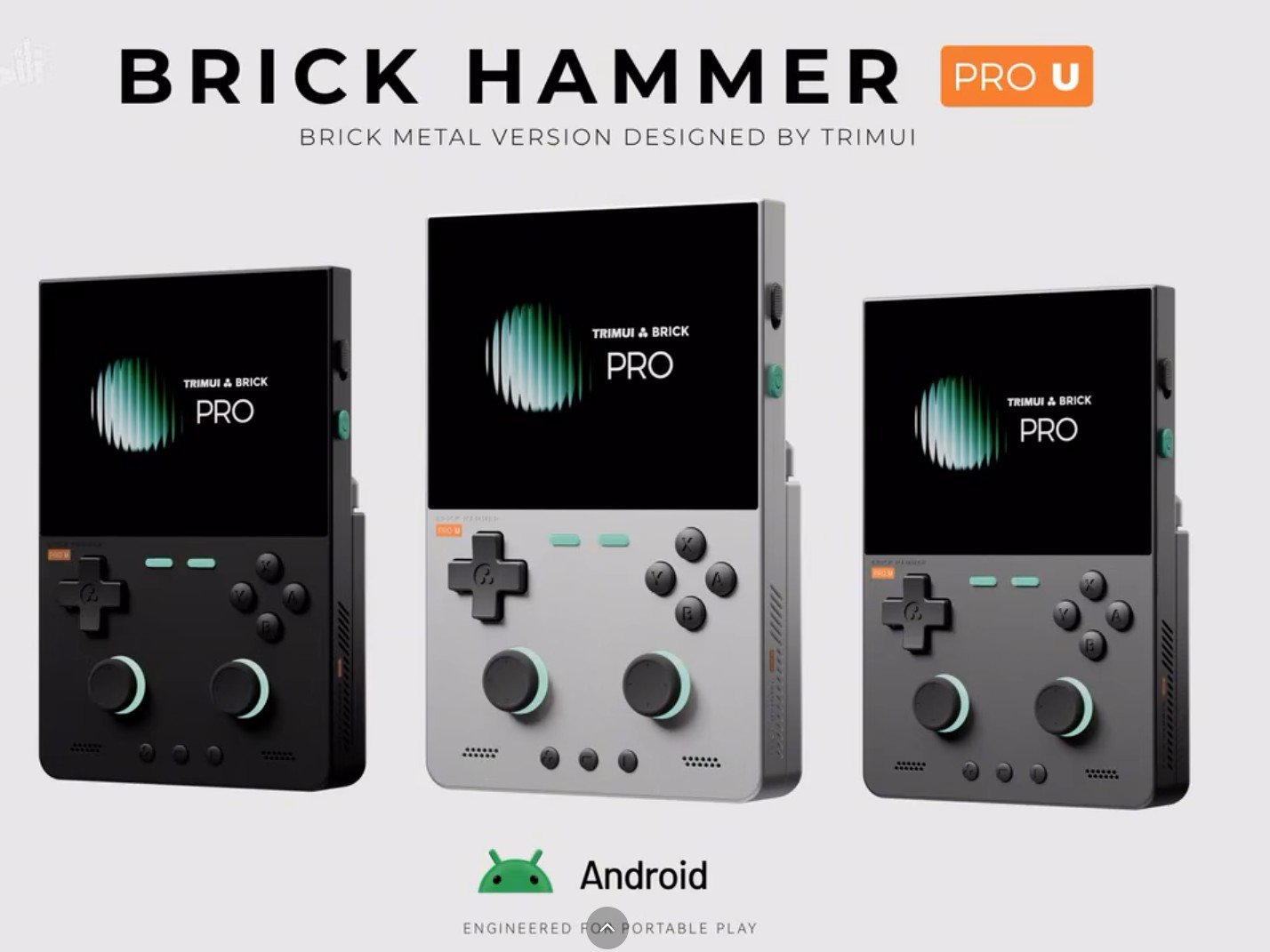
The headline device is the Brick Hammer Pro U, and it is the more interesting of the two. TrimUI gave it a 3.95-inch IPS panel at 1024 x 768 with a 60Hz refresh rate. That 4:3 resolution is a deliberate choice for a vertical handheld, since it maps cleanly onto Game Boy, NES, SNES, and arcade titles that were never widescreen to begin with. Driving it is the Snapdragon G2 Gen 1 with an Adreno A21 GPU, Qualcomm's gaming-focused mobile chip, paired with a 6-axis gyroscope and an Android install out of the box. TrimUI stayed quiet on RAM, storage, and battery capacity, which are the three numbers that will decide how this thing actually performs in longer sessions.
{{IMAGE:2}}
The Brick Pro is the value play. It shares the same 3.95-inch IPS LCD but swaps the Snapdragon for an Allwinner A133p, a quad-core chip clocked at 1.8GHz. That is the same silicon found inside the Powkiddy V90S, so its capabilities are already a known quantity in the handheld scene. It runs Linux rather than Android, which keeps the interface lightweight and the firmware focused on emulation instead of a general-purpose app ecosystem.
How it compares
The gap between these two is wider than the shared chassis suggests. The Snapdragon G2 Gen 1 in the Hammer Pro U is a genuine application-class SoC with an Adreno GPU, which puts Dreamcast, PSP, Saturn, and a meaningful slice of the PS2 and GameCube libraries on the table depending on the title and the emulator. The Allwinner A133p in the Brick Pro is a different class of part entirely. It is comfortable through PS1, Nintendo 64, and Dreamcast in many cases, but it is not the chip you buy expecting smooth PS2. Against TrimUI's own lineup, the Hammer Pro U slots in above the original Brick Hammer while keeping that model's metal construction, and the Brick Pro reads as a refreshed entry-level option rather than a step up in raw power.
The Android versus Linux split reinforces the divide. Android on the Hammer Pro U opens up store apps, streaming, and the broader set of Android-native emulators, at the cost of a heavier system and more setup. Linux on the Brick Pro boots faster, stays out of the way, and targets the buyer who wants a dedicated emulation box and nothing else.
{{IMAGE:3}}
Materials track the same premium-versus-budget logic. The Brick Hammer Pro U gets a metal shell in Black, Silver, and Gray. The Brick Pro uses polycarbonate in Light Grey, Black, and White. Beyond the shell material, the two are physically the same device, identical buttons, ports, and vents, so the choice comes down to what is inside and what it is wrapped in.
Who it's for
Buy the Brick Hammer Pro U if you want TrimUI's most capable vertical handheld, plan to push into PSP and beyond, and value the Android ecosystem plus a metal body. Buy the Brick Pro if your library tops out around the PS1 and N64 generation and you would rather spend less for a focused Linux device that still uses the same comfortable shape. TrimUI has not announced pricing or a firm release date, only that both are coming soon, so the final verdict waits on those two numbers and on the unconfirmed RAM, storage, and battery specs. You can watch the reveal on TrimUI's YouTube channel and follow product updates on the official TrimUI site.
Comments
Please log in or register to join the discussion