Uber’s Houston plan shows a ride-hailing company trying to turn autonomy from a pilot into fleet operations.
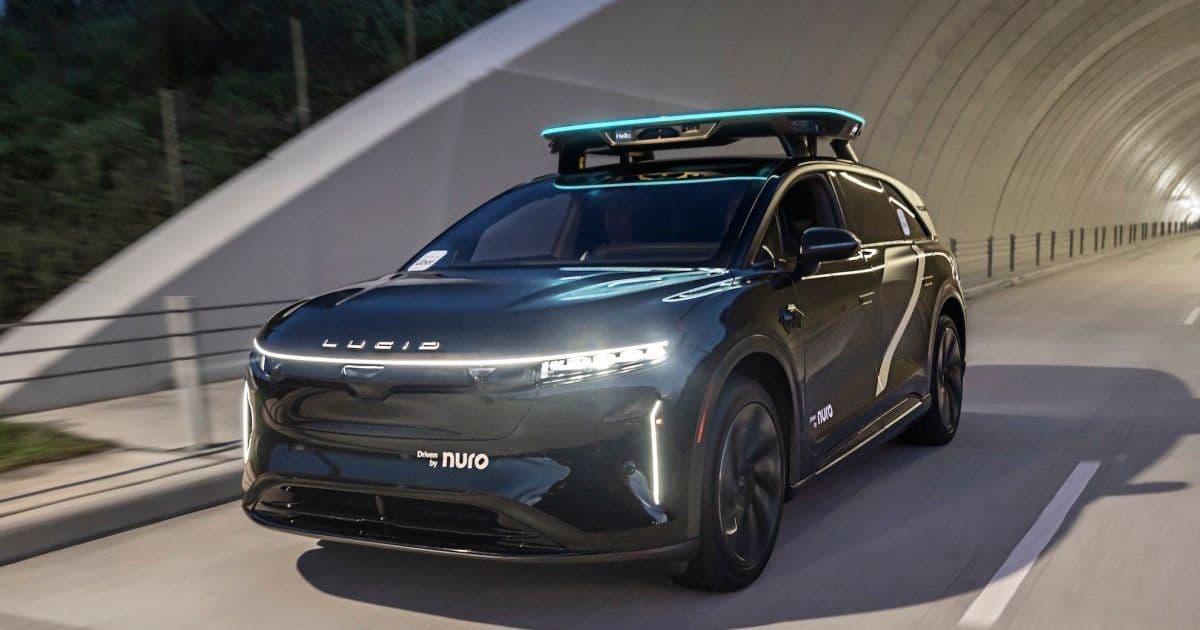
Uber plans to launch a premium robotaxi service in Houston by mid-2027, using Lucid Gravity SUVs equipped with Nuro’s self-driving system.
The Houston rollout gives Uber a second U.S. market under its autonomy partnership with Lucid and Nuro. The companies plan to start in the San Francisco Bay Area first, then expand to Houston, where Waymo already runs a commercial robotaxi service.
The plan signals a shift in Uber’s autonomy strategy. Uber left in-house self-driving development after its Advanced Technologies Group sale in 2020. Now it wants partners to supply the vehicle and autonomy stack while Uber handles rider demand, fleet ownership, charging, depot operations, and the in-cabin experience.
Uber said its combined engineering fleet with Nuro has 100 autonomous vehicles testing on public roads with safety operators in Houston. Nuro also uses closed courses and simulation to validate the system before riders get access. In San Francisco, Uber employees can hail Lucid robotaxis, though safety drivers still sit behind the wheel.
Nuro received a California Department of Motor Vehicles permit last month that allows it to remove the safety driver, but the company has not started driverless public rides with Uber. That gap matters for engineers watching the sector. A permit shows regulatory progress. A public driverless service tests reliability, remote assistance, fleet recovery, charging flow, rider support, and incident response.
Lucid gives the project a premium EV platform. The Lucid Gravity robotaxi uses high-resolution cameras, solid-state lidar sensors, and radar to help Nuro’s system read roads and traffic. Lucid plans to build production robotaxi versions at its Arizona factory, with Uber committed to buy at least 35,000 robotaxi-ready vehicles.
Houston also gives Uber a city with room to test operations outside the Bay Area’s dense autonomy scene. Uber has opened a 50,000-square-foot depot and charging pitstop in Houston. That physical hub points to the less glamorous side of robotaxis: cleaning, charging, storage, maintenance, software checks, and vehicle dispatch.
Developers and autonomy teams should read the Houston plan as an operations story as much as a model story. Nuro must prove its stack can handle Houston’s streets, weather, traffic behavior, and road design. Uber must prove it can run a fleet with enough uptime to make the economics work. Lucid must prove it can build the vehicles at scale.
The deal also gives Nuro a new path after its 2024 pivot away from building its own delivery robots. Instead of owning the whole delivery product, Nuro now licenses autonomy technology to partners. Uber’s reported $500 million investment gives Nuro capital and a major customer. Lucid also gains a large fleet buyer as EV startups face weak demand and Tesla’s scale advantage.
The counterargument starts with timing. Mid-2027 gives Uber and Nuro about a year to move from safety-operator testing to a paid service that riders can trust. Waymo has spent years building commercial robotaxi operations in Phoenix, San Francisco, Los Angeles, Austin, and Houston. Uber enters Houston with brand reach and fleet experience, but Waymo has a head start in driverless service.
The other question centers on the word “premium.” Riders may pay more for a Lucid Gravity cabin, but robotaxi adoption depends on wait times, trip coverage, price, and confidence after edge-case failures. A better cabin helps. A vehicle that arrives fast, takes the right route, and handles support problems without drama matters more.
Uber says it wants to take the program to dozens of cities in the coming years. Houston will test whether that ambition can leave the demo stage. If Uber, Lucid, and Nuro can make the service work there, the industry gets a new autonomy model: a ride-hailing network that owns the customer relationship and the fleet, while partners supply the car and the driverless system.
Comments
Please log in or register to join the discussion