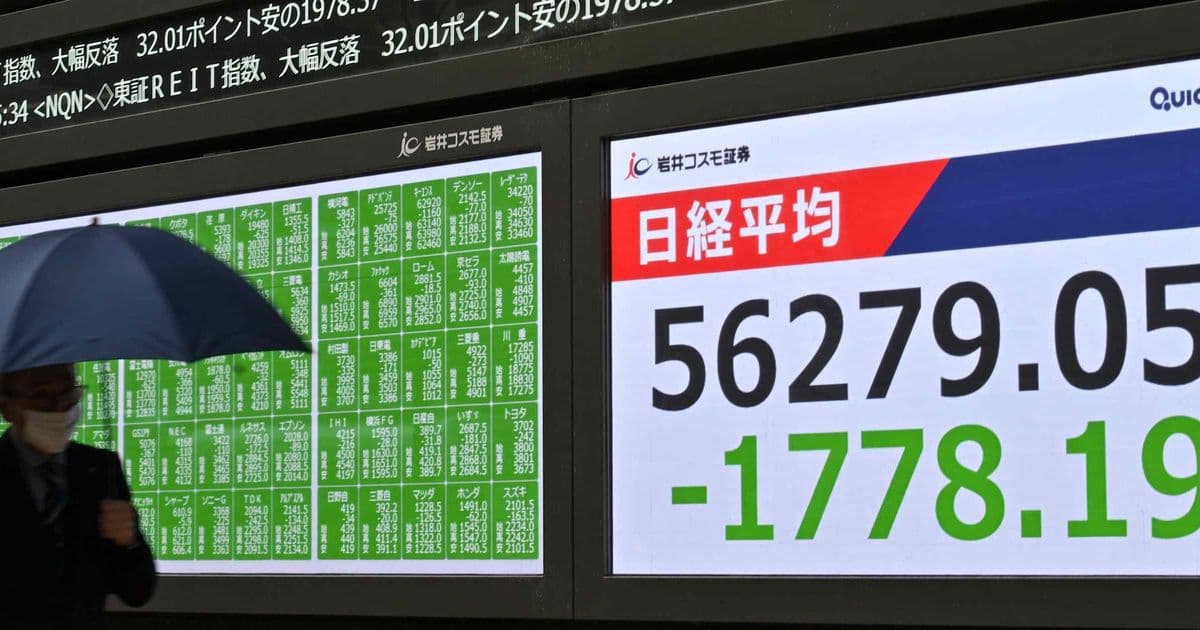
Asian markets plunged Tuesday as escalating tensions in Iran disrupted oil and gas supplies, fueling inflation fears and sending investors fleeing from risk assets.
Major Asian stock markets extended their losses Tuesday as the escalating geopolitical crisis in Iran sent shockwaves through global energy markets, triggering a broad sell-off across the region. Japan's Nikkei 225 index fell sharply, dropping over 2,500 points in just two days, while South Korea's KOSPI index slid 7% after returning from a holiday break.
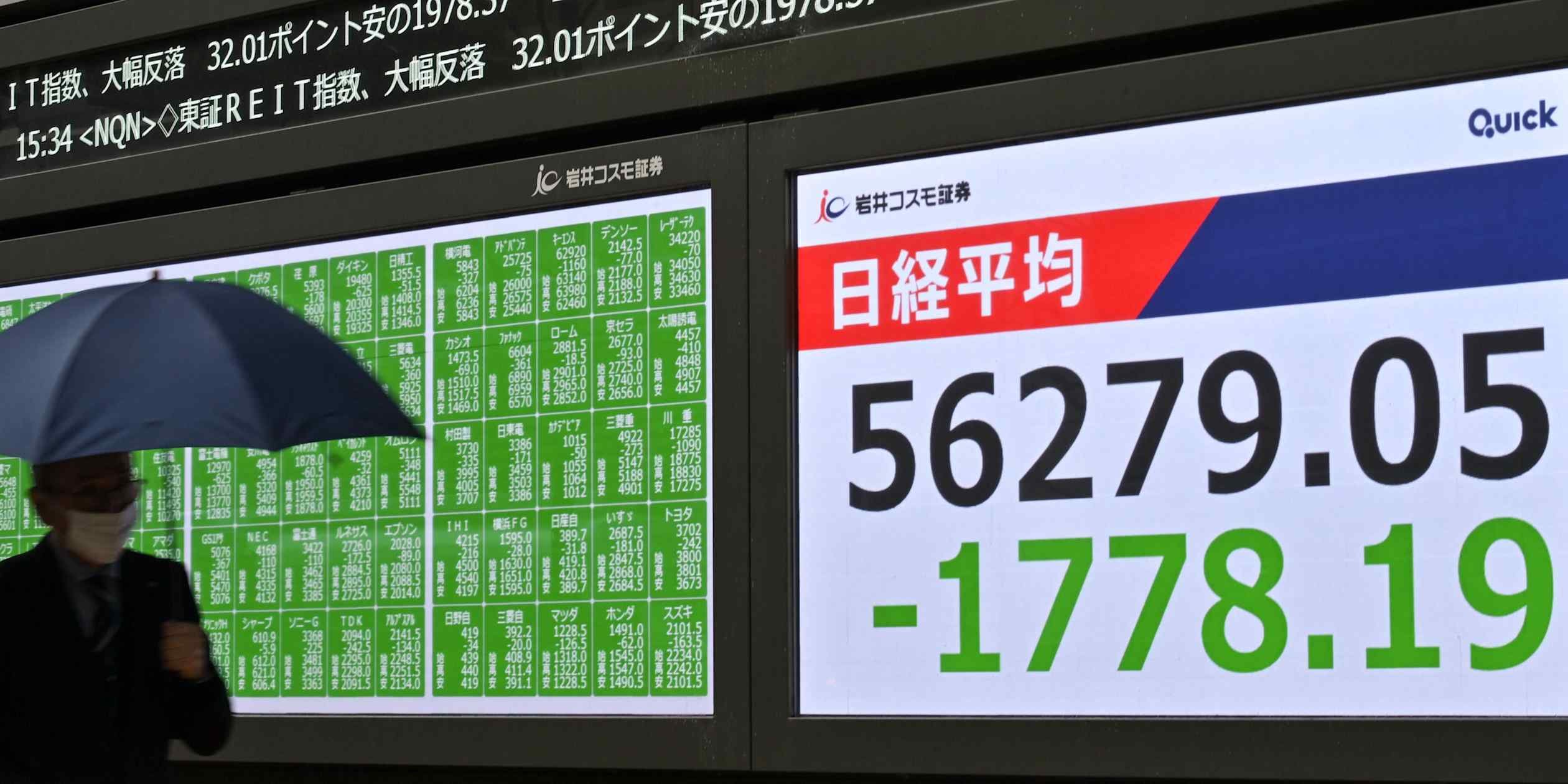
The market rout reflects growing investor anxiety over the potential for prolonged supply disruptions in oil and natural gas markets. With Iran being a major energy producer, the conflict has raised immediate concerns about global energy security and the potential for sustained price increases.
Energy Crisis Deepens Market Jitters
Oil prices surged to multi-year highs as traders priced in the risk of significant supply disruptions. Brent crude futures climbed above $95 per barrel, while West Texas Intermediate futures approached $90, marking their highest levels since late 2023. The spike in energy costs has reignited inflation fears that had only recently begun to subside following aggressive monetary tightening by central banks worldwide.
"The market is pricing in a worst-case scenario where Iranian oil exports could be severely curtailed for an extended period," said Hiroshi Watanabe, chief economist at Daiwa Institute of Research. "This creates a perfect storm of concerns - higher energy costs feeding into inflation, central banks potentially having to maintain tighter monetary policy, and the risk of a global economic slowdown."
Regional Market Impact
Beyond Japan and South Korea, other Asian markets also felt the pressure. Hong Kong's Hang Seng Index fell 3.2%, while Singapore's Straits Times Index dropped 2.8%. Chinese markets, which had been closed for a holiday, opened lower as investors reacted to the overnight developments.
The sell-off was particularly pronounced in sectors sensitive to energy prices and global trade. Airlines saw their stocks plummet as higher jet fuel costs threatened to squeeze margins. Shipping and logistics companies also faced pressure amid concerns about disrupted trade routes through the Strait of Hormuz, a critical chokepoint for global oil shipments.
Central Bank Dilemma
Adding to market uncertainty is the potential policy response from central banks. The Bank of Japan, which had been signaling a gradual path toward monetary normalization, now faces a difficult balancing act. Higher energy prices could push inflation above the bank's 2% target, but aggressive rate hikes risk derailing Japan's fragile economic recovery.
"The BOJ is in a tough spot," noted Masahiro Ichikawa, senior strategist at Sumitomo Mitsui DS Asset Management. "They need to weigh the inflation risks from higher energy costs against the growth risks from a potential global slowdown. The Iran crisis has complicated their policy calculus significantly."
Investor Flight to Safety
As risk assets sold off, investors rushed to traditional safe havens. The Japanese yen strengthened against the dollar, while gold prices rose to six-month highs. Government bonds across the region saw increased demand, with yields on 10-year Japanese government bonds falling to their lowest levels in months.
Emerging market currencies also came under pressure, with the South Korean won and Indonesian rupiah both weakening significantly against the dollar. The sell-off in emerging markets reflects concerns that higher energy prices could exacerbate current account deficits and strain fiscal positions in energy-importing countries.
Looking Ahead: Prolonged Uncertainty
The duration and severity of the market impact will largely depend on how the Iran crisis unfolds. While some analysts expect tensions to ease as diplomatic channels remain open, others warn that the conflict could escalate further, potentially drawing in other regional powers.
"Markets hate uncertainty, and right now there's plenty of it," said Kenichi Hirano, market analyst at Tachibana Securities. "Until there's more clarity on the geopolitical situation and its impact on energy supplies, we're likely to see continued volatility and risk aversion."
For now, Asian investors are bracing for more turbulence as they navigate the intersection of geopolitical risk, energy market dynamics, and monetary policy uncertainty. The coming weeks will be crucial in determining whether this represents a temporary market correction or the beginning of a more sustained period of instability.
Comments
Please log in or register to join the discussion