Corsair DDR5 RAM prices drop on Amazon while Google's TurboQuant algorithm could ease memory shortages in the long term
DDR5 RAM prices have shown a rare sign of moderation, with Corsair modules experiencing unusual price drops on Amazon, even as the broader memory shortage continues to impact gamers and PC builders.
Current DDR5 Price Trends
One 32GB RGB version of Corsair Vengeance DDR5 RAM is now available for $379.99, down from an earlier peak of $439.99. The unlit variety has also seen decreases, though prices remain below their historical highs. This price movement represents a notable shift in the DDR5 market, where costs have remained stubbornly high throughout the ongoing memory shortage.
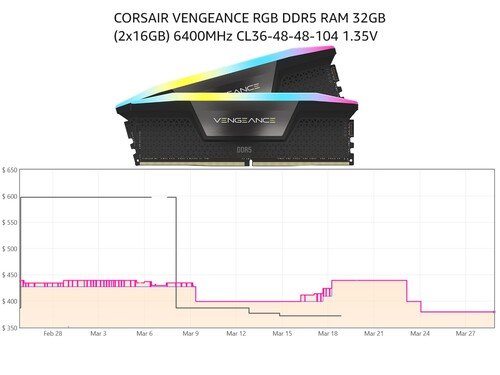
However, most DRAM remains unaffordable for many buyers. PCPartPicker, which tracks component costs, shows prices flattening but not falling for most options. The memory shortage has created a challenging environment for PC builders, with DDR5 modules still commanding premium prices compared to their DDR4 predecessors.
The Impact of Google's TurboQuant
An announcement from Google on March 24th may bring longer-term relief to the memory market. The tech giant revealed details about its TurboQuant algorithm, which addresses the growing key-value (KV) cache memory demand from AI models. According to Google, this advancement could reduce memory usage by a factor of 6 while simultaneously boosting performance.
In theory, this means complex AI models would require less DRAM and HBM, potentially easing the memory shortage that has plagued the industry. The announcement had immediate market effects, with stocks of major suppliers like SK Hynix and Samsung tumbling after investors processed the news.
Market Dynamics and Future Outlook
Despite the promising technology, TurboQuant may not directly drive down memory prices for consumers in the near term. Data centers could respond by relying on even larger AI models that require additional memory modules, potentially offsetting the efficiency gains. This dynamic would allow manufacturers to continue prioritizing enterprise clients over gamers and general consumers.
Without an effective solution or a significant shift in market demand, DDR5 RAM prices are unlikely to fall dramatically in the immediate future. The memory shortage has created a cascading effect throughout the PC ecosystem, with GPUs and storage also impacted, making it increasingly challenging to build gaming PCs.
Broader Industry Impact
The memory shortage has affected more than just PC builders. Console gaming has also been impacted, with Sony recently revealing a steep increase in the MSRPs of the PS5 and PS5 Pro. This price hike makes consoles less appealing as alternatives to gaming PCs, further complicating the market for consumers.
While the current price drop for Corsair DDR5 modules offers a glimmer of hope, the broader memory market remains constrained. The intersection of AI demand, manufacturing priorities, and component shortages continues to create a challenging environment for gamers and PC enthusiasts seeking affordable memory upgrades.
The memory market's evolution will likely depend on whether efficiency improvements like TurboQuant can offset growing demand from AI applications, or if new manufacturing capacity can meet both enterprise and consumer needs. Until then, consumers may need to navigate carefully between current price drops and the broader trend of elevated memory costs.
Comments
Please log in or register to join the discussion