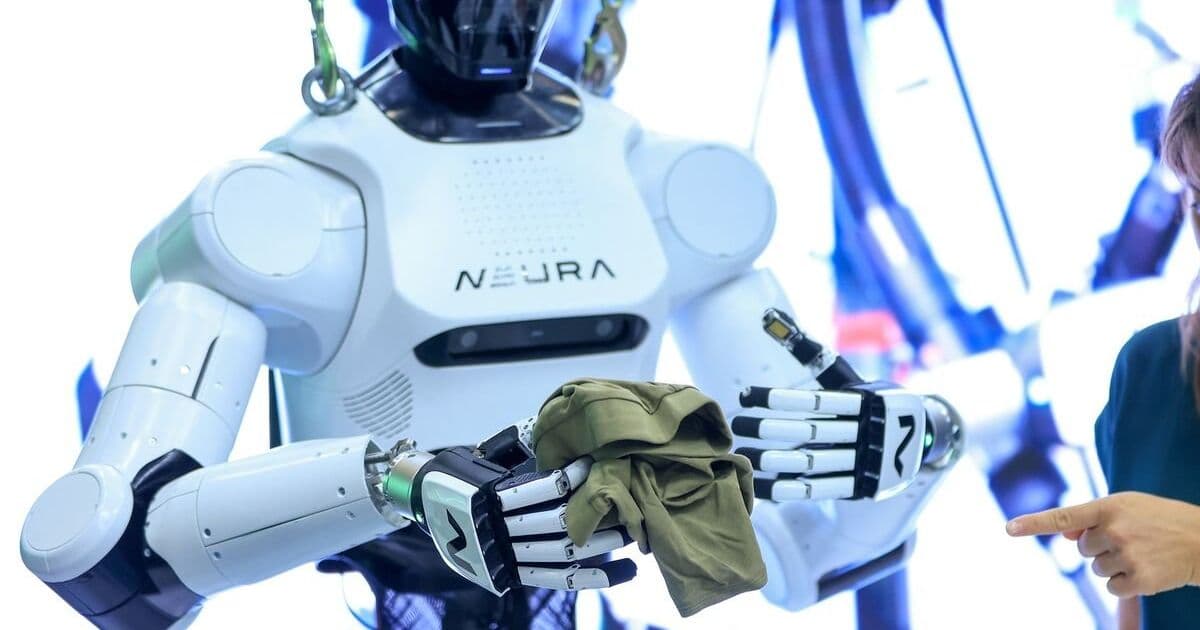
German robotics startup Neura Robotics secures massive funding round led by Tether to develop AI-powered humanoid robots for logistics applications, signaling growing investor confidence in physical AI.
German robotics startup Neura Robotics is raising approximately €1 billion ($1.2 billion) in a funding round backed by Tether, the cryptocurrency company behind the world's largest stablecoin, at a valuation of around €4 billion, according to sources familiar with the matter.
The Investment Landscape
The massive funding round represents one of the largest investments in European robotics this year and underscores the growing convergence between cryptocurrency wealth and AI hardware development. Tether's involvement signals continued diversification of crypto profits into real-world infrastructure and technology.
Neura Robotics specializes in developing cognitive, humanoid robots designed specifically for logistics applications. The company's robots are engineered to handle complex warehouse operations, material handling, and supply chain automation tasks that traditionally required human labor.
Technical Focus and Market Position
Unlike many robotics startups that focus on single-purpose industrial arms or basic automation, Neura is building general-purpose humanoid robots with advanced cognitive capabilities. This positions the company at the intersection of several emerging technology trends:
- Physical AI: Robots that can perceive, reason, and act in unstructured environments
- Logistics automation: Addressing labor shortages in warehousing and distribution
- Human-robot collaboration: Systems designed to work alongside human workers
Industry Context
The funding comes amid a broader surge in robotics investment, particularly in companies developing humanoid robots. Competitors like Figure AI, Tesla's Optimus project, and various Chinese robotics firms are also attracting significant capital as investors bet on the future of physical AI.
However, Neura's focus on logistics applications rather than consumer or general-purpose robots may provide a clearer path to commercialization. The logistics sector faces persistent labor shortages and has demonstrated willingness to invest in automation solutions.
Tether's Strategic Move
Tether's participation in the funding round represents another example of the stablecoin issuer deploying its substantial profits into technology infrastructure. The company has previously invested in Bitcoin mining, renewable energy projects, and other technology ventures.
This investment strategy allows Tether to diversify its holdings while supporting infrastructure that could benefit from increased cryptocurrency adoption and digital economy growth.
Market Implications
The €4 billion valuation places Neura Robotics among the most valuable private robotics companies globally. This valuation reflects investor confidence in the company's technology, team, and market opportunity, but also sets high expectations for future growth and commercialization.
For the logistics industry, the investment could accelerate the deployment of advanced robotics solutions, potentially transforming warehouse operations and supply chain management. The cognitive capabilities of Neura's robots suggest they may be able to handle more complex tasks than traditional industrial automation systems.
Challenges Ahead
Despite the substantial funding, Neura faces significant challenges:
- Technical hurdles: Developing reliable, safe humanoid robots for real-world environments
- Market adoption: Convincing logistics companies to invest in advanced robotics
- Competition: Operating in an increasingly crowded field of robotics startups
- Regulatory compliance: Meeting safety and operational standards for autonomous systems
Future Outlook
The funding provides Neura with substantial resources to advance its technology development and expand commercial deployments. The involvement of Tether also provides connections to the cryptocurrency and blockchain ecosystem, which could prove valuable as digital currencies and physical automation systems increasingly intersect.
The success of this investment could influence future funding patterns in robotics, potentially encouraging more cryptocurrency companies to invest in physical AI infrastructure. It also highlights the growing recognition that the future of AI extends beyond software into the physical world of robotics and automation.
As Neura Robotics moves forward with its ambitious plans, the industry will be watching closely to see whether cognitive humanoid robots can deliver on their promise to transform logistics and supply chain operations. The substantial investment suggests that at least some investors believe the answer is yes.
Comments
Please log in or register to join the discussion