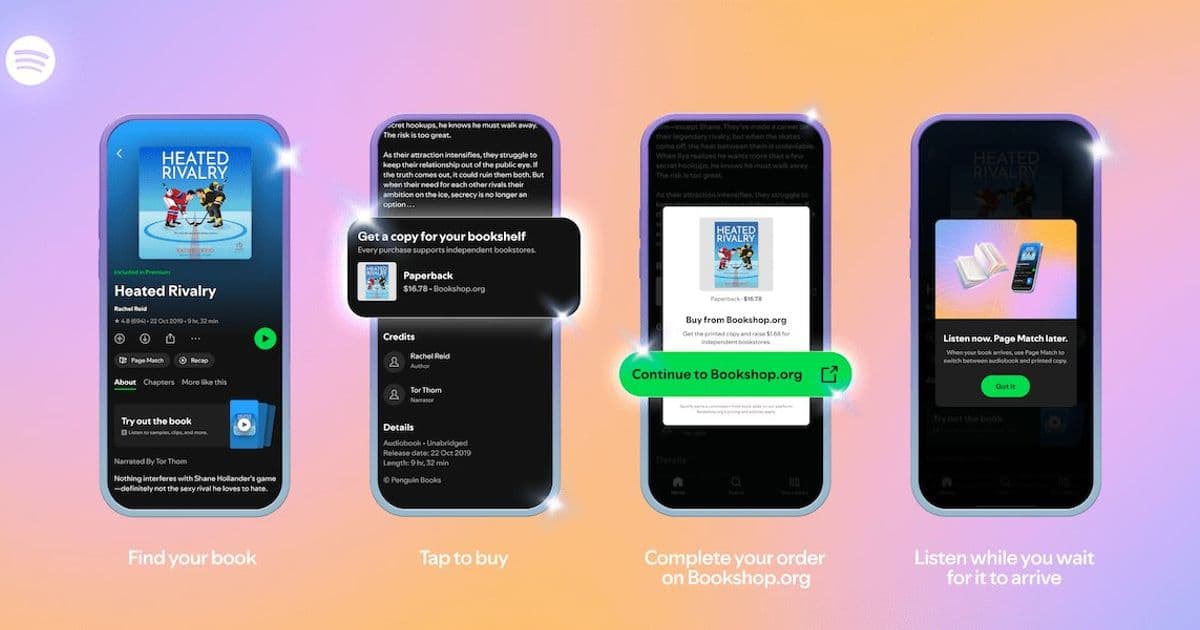
Spotify is venturing beyond music and podcasts with a new feature that lets users purchase physical books in the US and UK through Bookshop.org integration, while also expanding its Page Match tool to support 30 additional languages.
Spotify is making a surprising pivot into the world of physical books, launching a new feature that allows users in the United States and United Kingdom to purchase printed books directly through its platform. The streaming giant has partnered with Bookshop.org to power this expansion, marking a significant diversification of its traditionally audio-focused business model.
This move comes as part of Spotify's broader strategy to become a comprehensive entertainment platform. The company first hinted at its interest in the book market back in February when it began testing book-related features, but the official launch represents a more substantial commitment to the publishing industry.
Bookshop.org Partnership Powers Physical Book Sales
The integration with Bookshop.org is particularly noteworthy because it aligns with growing consumer preferences for supporting independent bookstores. Bookshop.org has positioned itself as an alternative to Amazon's dominant book retail presence, directing a portion of sales to local, independent bookshops. This partnership allows Spotify to tap into the physical book market while maintaining a socially conscious approach to retail.
For users, the experience appears seamless. When browsing through Spotify's book-related content, listeners can now see options to purchase physical copies of titles they're interested in. The platform leverages Bookshop.org's extensive catalog and fulfillment network to handle the actual sales and shipping processes.
Page Match Tool Gets Major Language Expansion
Alongside the physical book sales feature, Spotify is significantly expanding its Page Match tool, which helps users find books based on their reading preferences. The tool is adding support for 30 additional languages, dramatically increasing its global reach and accessibility.
This expansion suggests Spotify is thinking beyond just English-language markets and aiming to serve its diverse international user base. The Page Match tool uses algorithms to recommend books based on user preferences, reading history, and listening habits on the platform.
Strategic Implications for Spotify
The move into physical books represents a calculated risk for Spotify. While the company has successfully dominated the audio streaming space, branching into physical goods requires different logistics, partnerships, and consumer behaviors. However, the partnership with Bookshop.org mitigates many of these challenges by leveraging an existing infrastructure.
Industry analysts see this as part of a broader trend where digital platforms are seeking to create more tangible connections with their users. Physical books offer a different kind of engagement than streaming audio, potentially deepening user relationships with the Spotify brand.
Market Context and Competition
Spotify's entry into book sales comes at a time when the publishing industry is experiencing interesting shifts. While e-book sales have plateaued in recent years, physical book sales have shown resilience, particularly among younger readers who value the tactile experience of print.
The partnership with Bookshop.org also positions Spotify against Amazon, which dominates both e-book and physical book sales through Kindle and its broader retail operations. By aligning with Bookshop.org, Spotify is essentially choosing sides in the ongoing battle between independent bookstores and retail giants.
User Experience and Integration
For existing Spotify users, the book purchasing feature integrates naturally into their current experience. The platform can recommend books based on podcast listening habits, creating interesting cross-pollination between different forms of media consumption.
This integration could be particularly powerful for genres like non-fiction, where listeners of business or self-improvement podcasts might be interested in deeper dives through related books. The seamless transition from audio content to physical book purchasing could create new revenue streams for both Spotify and authors.
Challenges and Considerations
Despite the strategic advantages, Spotify faces several challenges in this new venture. Physical book logistics are more complex than digital streaming, requiring careful management of inventory, shipping, and customer service. The company will need to ensure that the Bookshop.org integration provides a smooth experience that meets user expectations.
There's also the question of whether Spotify users want to buy books through a music platform. The company will need to carefully market this new feature and demonstrate its value to users who primarily associate Spotify with music and podcasts.
Future Implications
The success of this book sales initiative could pave the way for further expansion into physical goods and experiences. If users respond positively to purchasing books through Spotify, the company might explore similar partnerships in other areas like merchandise, event tickets, or even physical music formats.
This move also reflects a broader trend in the tech industry where companies are seeking to create more holistic entertainment ecosystems. By combining audio streaming, podcasts, and now physical books, Spotify is positioning itself as a one-stop shop for various forms of media consumption.
Conclusion
Spotify's launch of physical book sales through Bookshop.org represents an ambitious expansion of its platform capabilities. While it may seem like an unusual move for a company known primarily for music streaming, the integration makes strategic sense in the context of creating a more comprehensive entertainment ecosystem.
The success of this initiative will likely depend on how well Spotify can integrate the book purchasing experience into its existing platform and whether users embrace the convenience of buying physical books through a service they already use daily. As the company continues to evolve beyond its audio roots, this book sales feature could be just the beginning of a broader transformation in how we think about digital entertainment platforms.
Comments
Please log in or register to join the discussion